Students from Six Countries Begin Viticulture and Enology Course at UTADPhoto by Antige on Pexels
Science
Образование

Students from Six Countries Begin Viticulture and Enology Course at UTAD

Notícias Portugal9 September 2026 at 09:20

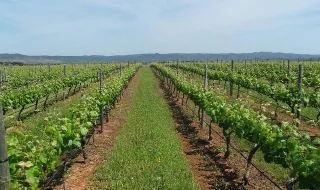
Students from six countries - Canada, Ecuador, France, India, Italy, and Liberia - began the International Master's program Vigne, Vin et Gestion du Terroir (Vintage) at the University of Trás-os-Montes and Alto Douro (UTAD), a program focused on viticulture, enology, and wine management. The official reception took place at the university facilities with the presence of the Vice-Rector for Internationalization, Patrícia Poeta, the master's coordinator Etienne Neethling, Alfredo Aires (director of the Department of Agronomy), and Aureliano Malheiro, responsible for student support.

During the first semester, students will carry out practical internships on farms and wineries in renowned wine regions, including Douro, Dão, Alentejo, and Vinhos Verdes. This immersion will allow students to learn about different production models and follow all stages of the harvest, from grape picking to winemaking methods, combining theory and practice.

The International Vintage Master's program was created in 2002 as a collaborative effort between higher education institutions from various European countries, namely France, Spain, Italy, and Hungary, with UTAD being the only Portuguese university in this consortium. The program aims to train qualified professionals for a constantly evolving wine sector.

The arrival of these international students reinforces the cultural diversity of the campus and consolidates UTAD's reputation as a center of excellence in education and research in the field of viticulture and enology, highlighting the economic, cultural, and scientific importance of wine production in a territory recognized for its wine-making tradition.
Related articles

Science

Excavations in the Alto Alentejo reveal connections to the Roman Orient

Archaeological excavations coordinated by the University of Évora in the Alto Alentejo, at Santa Vitória do Ameixial (Estremoz) and at Horta da Torre (Fronteira), are revealing that the Roman presence in the region was more significant and diverse than previously thought, challenging the traditional idea that the Alentejo was only a peripheral zone of the Roman Empire. The works, involving students from various Portuguese universities, have allowed the identification of remains that demonstrate connections to the Roman Orient.

DianaFM09/09/26, 09:40
Science

Have the leaves of the Snake Plant started to curl? This sign may indicate a problem that many ignore

The leaves of the Snake Plant, one of the most popular indoor plants, curl when something is wrong with its care. This symptom can result from both lack and excess of water, since the plant stores water in its tissues. When the substrate remains dry for too long, it consumes its reserves and the leaves curl to reduce moisture loss. In the case of overwatering, the roots remain too long moist, which reduces the ability to absorb nutrients and can cause rotting. Temperature is also an important factor: values close to 10°C, especially with moist soil, increase the risk of root problems. The good news is that in most cases, the problem can be corrected with adjustments to watering and temperature conditions.

Postal do Algarve09/09/26, 09:40
Science

Peru: archaeologists discover 38 skeletons in ancient citadel

Archaeologists discovered a burial with remains of 38 people and gold and copper objects at the ancient archaeological site of Chan Chan, in northern Peru, revealing an important find related to the Chimú civilization, which flourished in the region before the Inca Empire.

Euronews Portugal09/09/26, 09:10
Vegetação das falésias de Peniche pode dar origem a novos ingredientes para cosméticos
Science

Vegetation of Peniche cliffs may give rise to new ingredients for cosmetics

Researchers from the University of Leiria and the University West are developing a biotechnological solution based on sea fennel, a plant that grows on the cliffs of Peniche, with the aim of creating natural ingredients for the cosmetic industry and reducing dependence on direct collection from nature, thus promoting sustainability and the preservation of coastal plant species.

SAPO Notícias09/09/26, 09:03