Have the leaves of the Snake Plant started to curl? This sign may indicate a problem that many ignorePhoto by RSilveiraphotography on Pexels
ScienceFaro

Have the leaves of the Snake Plant started to curl? This sign may indicate a problem that many ignore

Postal do Algarve9 September 2026 at 09:40

The Snake Plant is one of the most popular and resilient indoor plants, but when its leaves start to curl, the plant is giving a warning that something is not right. This is one of the most common problems observed in this species and, in most cases, it is linked to the way the plant is receiving water, which can occur both from scarcity and excess of watering.

The leaves of this plant store water in their tissues, a characteristic that allows it to resist long periods without watering. However, when the substrate remains dry for too long, the plant begins to consume its accumulated reserves and the leaves may lose firmness, gradually curling to reduce moisture loss. Dehydration is one of the most common causes and, in these situations, the plant also tends to show brownish tips, loss of vigor, and a wilted appearance.

On the other hand, excess water can cause the same symptoms, since the roots remain in contact with moisture for too long, reducing the plant's ability to properly absorb nutrients. When this happens, tissue damage may occur and healthy growth becomes compromised. Besides the frequency of watering, temperature also plays an important role, as the Snake Plant may have difficulties when temperatures drop to values close to 10 degrees Celsius, especially if the soil remains moist.

The good news is that in most cases, the problem can be corrected. The recommendation is to wait until the substrate dries completely before watering again, adjust the frequency of watering, and ensure adequate temperature conditions. Deep watering allows the necessary moisture to be restored when the cause is lack of water, while pruning the heavily affected leaves can help the plant concentrate energy on new growth when there is excess water.


Related articles

Science

Volcanic alert raised to V1 at Furnas volcano

The Azores Seismovolcanic Information and Surveillance Centre (CIVISA) raised the volcanic alert to level V1 at Furnas volcano, on São Miguel island, due to an increase in seismic activity recorded in the region, indicating that the volcanic system is in a metastable equilibrium phase.

Açoriano Oriental09/09/26, 10:37
Papel higiénico no frigorífico: descobre para que serve este truque
Science

Toilet paper not in the fridge: discover what this trick is for

Placing a roll of toilet paper in the fridge is a household trick that helps absorb excess moisture and reduce some odors inside the appliance. The paper works as a natural dehydrating agent, being an economical and simple solution to keep the fridge fresher and without bad smells. However, experts warn that the paper should be changed regularly and that this method does not replace the usual cleaning of the appliance.

RFM09/09/26, 10:30
El ascensor de Einstein revela su secreto cuántico: detectan la “huella” de la caída libre
Science

Einstein's elevator reveals its quantum secret: the "footprint" of free fall detected

A quantum experiment managed to detect for the first time the "footprint" of free fall in subatomic particles, revealing what happens when Einstein's famous elevator—his happiest idea about the equivalence between free fall and the absence of gravity—is applied to quantum objects. Scientists managed to observe how a quantum particle responds when in free fall, opening a new window to understanding the interface between general relativity and quantum mechanics, two pillars of modern physics that have not yet been fully reconciled.

El Periódico Mediterráneo - General09/09/26, 10:17
Há misteriosos hexágonos no fundo do mar. Portugal tem pistas com 520 milhões de anos
Science

There are mysterious hexagons on the seafloor. Portugal has clues from 520 million years ago

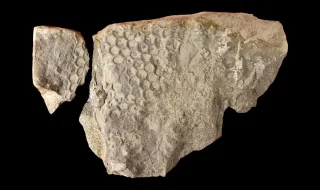
Scientists investigate the mystery of hexagonal patterns etched on seabeds around the world, known as Paleodictyon, which appear in Cambrian ocean sediments 520 million years old in Portugal and also in today's oceans. A Portuguese fossil helped identify that these honeycomb-like galleries were likely excavated by small arthropods, and the hexagonal shape may have functioned as a communication network between the animals. The mystery about the origin of these patterns has intrigued geologists since the 18th century.

ZAP Notícias09/09/26, 10:00