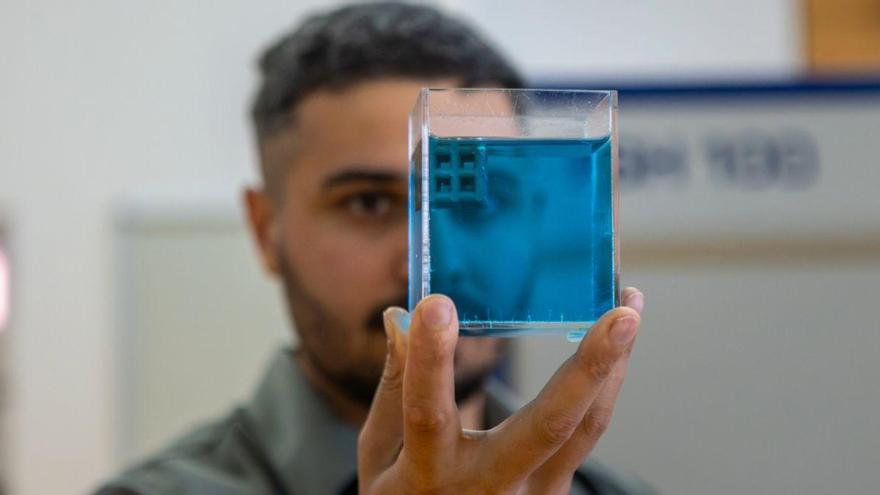
A team of researchers developed a 3D-printed titanium structure that can float on water, even after suffering significant damage. This innovation represents an important advance in materials engineering, combining metallic properties with buoyancy capabilities previously considered incompatible.
The structure's design combines an ultralight metal lattice with polyurethane foam, creating a composite material that maintains its buoyancy capacity under various conditions. This combination allows the structure to withstand considerable damage without losing its main functionality.
The developed technology can open new possibilities for devices and structures intended to operate at sea. Potential applications include maritime equipment, offshore support structures, and other devices that require mechanical resistance combined with buoyancy.
This development demonstrates how 3D printing allows creating geometries and materials impossible to manufacture with traditional methods, expanding the boundaries of what is technically viable in the construction of maritime structures.