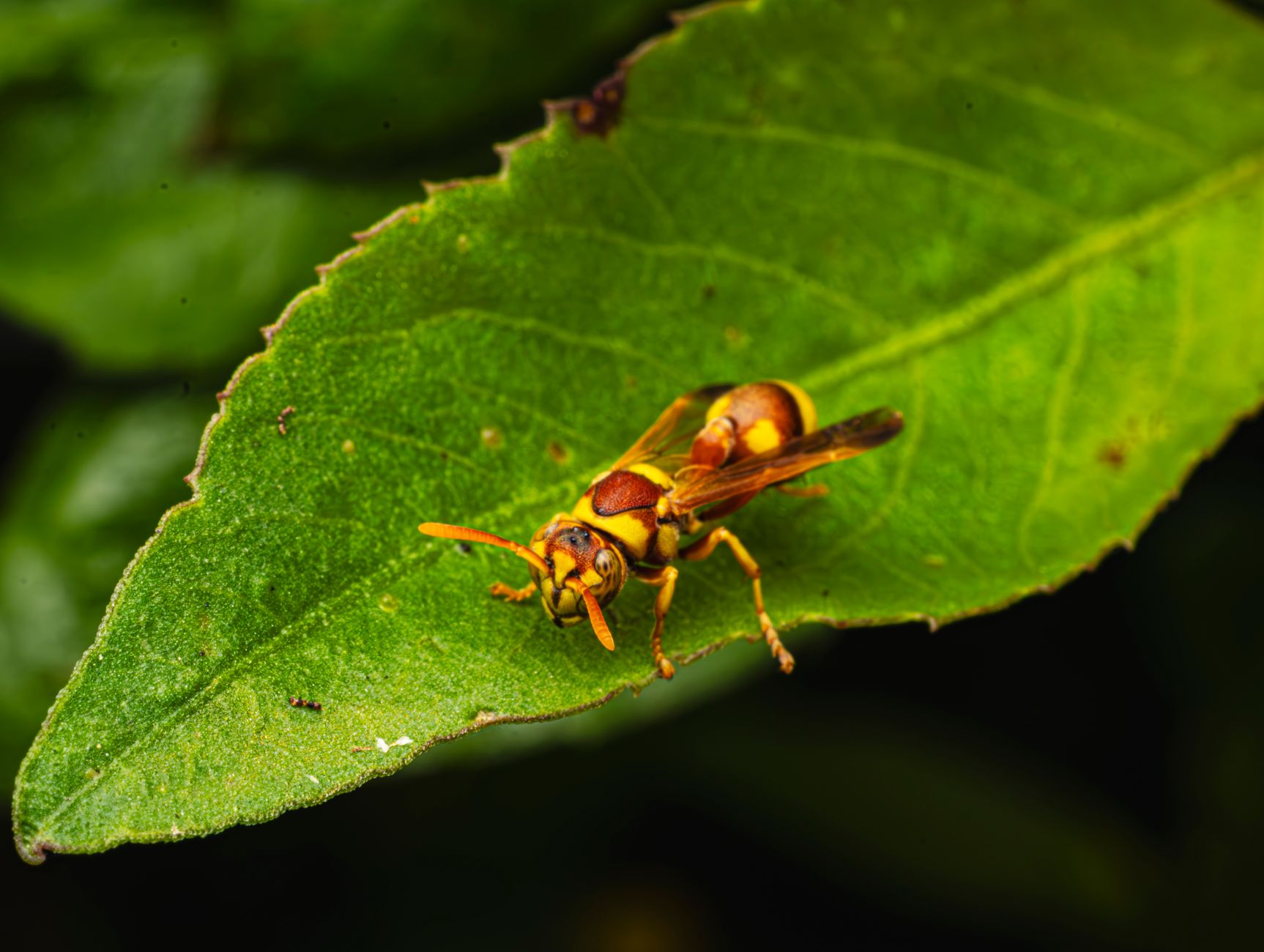
What species is this: mud-dauber wasp Sceliphron sp.Photo by 哲聖 林 on Pexels
ScienceFaroAçores

What species is this: mud-dauber wasp Sceliphron sp.

Wilder4 September 2026 at 12:31

The reader Madalena Martinho found cocoons in the upper gutter of her door in Figueira, Portimão, on September 3rd, and asked Wilder for help identifying the species. Albano Soares, from the Tagis Biodiversity Stations Network – Center for the Conservation of Portuguese Butterflies, responded that these are mud dauber wasp nests of the genus Sceliphron.

These are solitary wasps and completely harmless, even when disturbed. Besides representing no danger, they are excellent pollinators and contribute to controlling populations of night-flying moths that sometimes affect orchards, as that is what is inside these nests as food for the larvae.

Sceliphron wasps live all over the world, except in polar regions. They build their nests using mud in shady areas, sometimes even inside doors and windows. The construction of the nests is done exclusively by the female, who can build one cell per day, transporting the mud from its place of origin to the nest through dozens of trips.
Related articles

Science

Meet the three vulture species of Portugal

Portugal hosts three vulture species: the cinereous vulture (Aegypius monachus), the largest in Europe with a three-meter wingspan, classified as Endangered and which returned to nest in Portugal in 2010 after disappearing in the 1970s; the griffon vulture (Gyps fulvus), the most common species with at least 1200 pairs and expanding in the country; and the Egyptian vulture (Neophron percnopterus), also known as the scavenger, the smallest of the Iberian vultures, classified as Endangered and which spends the winter months in Africa. The three species play an essential ecological role by removing decomposing carcasses, preventing water contamination and the spread of diseases.

Wilder04/09/26, 13:31
Un estudio español revela cómo las defensas del organismo contribuyen a la inflamación asociada al envejecimiento
Science

A Spanish study reveals how the body's defenses contribute to inflammation associated with aging

A study led by the Higher Council for Scientific Research (CSIC) of Spain identified one of the mechanisms that alter blood cell production during aging. The research reveals how the body's defenses contribute to inflammation associated with aging, which may open the way for strategies that allow for a healthier old age, with less fragility and dependence in the final years of life.

El Periódico Mediterráneo - General04/09/26, 13:18
Un estudio revela el papel clave de una proteína en la formación de la placenta y el crecimiento del feto
Science

A study reveals the key role of a protein in the formation of the placenta and fetal growth

Researchers from the Centro de Biologia Molecular Severo Ochoa (CSIC-UAM) identified in rats a new molecular mechanism essential for the correct formation of the placenta, demonstrating that the IRS2 protein plays a fundamental role in the formation of the syncytiotrophoblast, a specialized structure that participates in the exchange of oxygen and nutrients between the mother and the fetus.

El Periódico Mediterráneo - General04/09/26, 13:16
Science

Spain is the second country in the EU in Marie Curie funds: 17.2 million for 121 researchers

Spain positions itself as the second country in the European Union in Marie Sklodowska-Curie COFUND 2026 funds, securing 17.2 million euros for five projects that will allow the entry of 121 researchers into Spanish universities and research centers. This result highlights the country's capacity to attract scientific talent within the framework of the European fellowship and training program for researchers.

Euronews Portugal04/09/26, 13:04