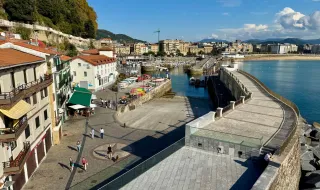
São Pedro do Sul receives the "Medicina Vai" project with 50 volunteer studentsPhoto by Marcio Ribeiro on Pexels
Science
Образование
Инвестиции
PortoViseu

São Pedro do Sul receives the "Medicina Vai" project with 50 volunteer students

Jornal do Centro4 September 2026 at 11:05

Around 50 Medical students from the University of Porto will participate, between September 7 and 11, in the XV edition of the "Medicina Vai" project in São Pedro do Sul. The initiative results from a partnership between the Municipality of São Pedro do Sul and the Student Association of the Faculty of Medicine of the University of Porto, promoted by the Department of Volunteering, Public Health and Community Action of that association.

The project aims to promote health through training, education and awareness actions, including blood glucose and blood pressure evaluations, aimed at the general population. The students will travel through the parishes of the municipality on September 7, 8, 9 and 11, as part of the "Door to Door" and screening actions, with particular attention to the most isolated communities and people with greater difficulties in accessing healthcare.

On September 10, the volunteers will visit Private Institutions of Social Solidarity with Residential Facilities for Elderly People and day care services, as well as Termalistur. During these visits, health promotion actions for physical and mental health are planned, including blood glucose and blood pressure evaluations, Basic Life Support training and home visits.

On September 11, between 10:00 AM and 4:30 PM, Parque das Nogueiras hosts the "Little Ones' Hospital", a pedagogical activity designed to familiarize children with healthcare professionals and care, helping to reduce the so-called "white coat fear". The municipality highlights that the initiative reinforces its commitment to prevention and the promotion of healthy lifestyles, while allowing future doctors to approach local communities and raise awareness of the specific needs of different territories.
Related articles

Science

Meet the three vulture species of Portugal

Portugal hosts three vulture species: the cinereous vulture (Aegypius monachus), the largest in Europe with a three-meter wingspan, classified as Endangered and which returned to nest in Portugal in 2010 after disappearing in the 1970s; the griffon vulture (Gyps fulvus), the most common species with at least 1200 pairs and expanding in the country; and the Egyptian vulture (Neophron percnopterus), also known as the scavenger, the smallest of the Iberian vultures, classified as Endangered and which spends the winter months in Africa. The three species play an essential ecological role by removing decomposing carcasses, preventing water contamination and the spread of diseases.

Wilder04/09/26, 13:31
Un estudio español revela cómo las defensas del organismo contribuyen a la inflamación asociada al envejecimiento
Science

A Spanish study reveals how the body's defenses contribute to inflammation associated with aging

A study led by the Higher Council for Scientific Research (CSIC) of Spain identified one of the mechanisms that alter blood cell production during aging. The research reveals how the body's defenses contribute to inflammation associated with aging, which may open the way for strategies that allow for a healthier old age, with less fragility and dependence in the final years of life.

El Periódico Mediterráneo - General04/09/26, 13:18
Un estudio revela el papel clave de una proteína en la formación de la placenta y el crecimiento del feto
Science

A study reveals the key role of a protein in the formation of the placenta and fetal growth

Researchers from the Centro de Biologia Molecular Severo Ochoa (CSIC-UAM) identified in rats a new molecular mechanism essential for the correct formation of the placenta, demonstrating that the IRS2 protein plays a fundamental role in the formation of the syncytiotrophoblast, a specialized structure that participates in the exchange of oxygen and nutrients between the mother and the fetus.

El Periódico Mediterráneo - General04/09/26, 13:16
Science

Spain is the second country in the EU in Marie Curie funds: 17.2 million for 121 researchers

Spain positions itself as the second country in the European Union in Marie Sklodowska-Curie COFUND 2026 funds, securing 17.2 million euros for five projects that will allow the entry of 121 researchers into Spanish universities and research centers. This result highlights the country's capacity to attract scientific talent within the framework of the European fellowship and training program for researchers.

Euronews Portugal04/09/26, 13:04