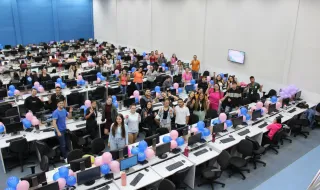
More than 30 researchers updated the national inventory of non-indigenous marine species to 231, confirmed in mainland Portugal, the Azores and Madeira. Eight years after the last inventory, this work was published in the journal Marine Pollution Bulletin and brought together 31 researchers from 11 Portuguese universities, three national public entities and various research institutes, led by researchers from MARE – Marine and Environmental Sciences Centre, and ARNET – Aquatic Research Network. Of the 231 confirmed species, 159 occur in mainland Portugal, 81 in the Azores and 62 in Madeira, including five species never before recorded in the country, identified on the southwest coast near the Port of Sines.
The study reveals a clear geographical pattern regarding the origin of invasive species. In mainland Portugal, 39% of non-indigenous species come from the temperate North Pacific and 24% from the North Atlantic. In the archipelagos, the pattern reverses: in Madeira, 27% originate from the North Atlantic and 24% from the Tropical Atlantic, while in the Azores, 37% come from the North Atlantic and 19% from the North Pacific. Maritime transport, through ballast water and biofouling on ship hulls, is the main introduction pathway, with aquaculture having a particularly relevant role on the mainland. The Port of Sines emerges as a strategic entry point, given the crossing of maritime routes connecting Asia, the Mediterranean, the United States and Africa.
Beyond the morphological checklist, the team developed a pioneering watchlist of 22 species detected exclusively through molecular methods, such as environmental DNA, without physical confirmation of their existence. This mechanism functions as an early warning system for potential invaders. The study also identified that only 12.5% of the 231 species have genetic sequences obtained from specimens collected in Portuguese waters, which may reduce the reliability of rapid detection tools. The authors advocate for strengthened sample collection in Portugal as a priority to make genetic surveillance more accurate.
The work results from a national collaboration coordinated by researcher Paula Chainho from MARE at the University of Lisbon, involving the Directorate-General for Natural Resources, Security and Maritime Services, IPMA and ICNF, and is funded by the Recovery and Resilience Plan, through Agenda NEXUS, and by the Foundation for Science and Technology.