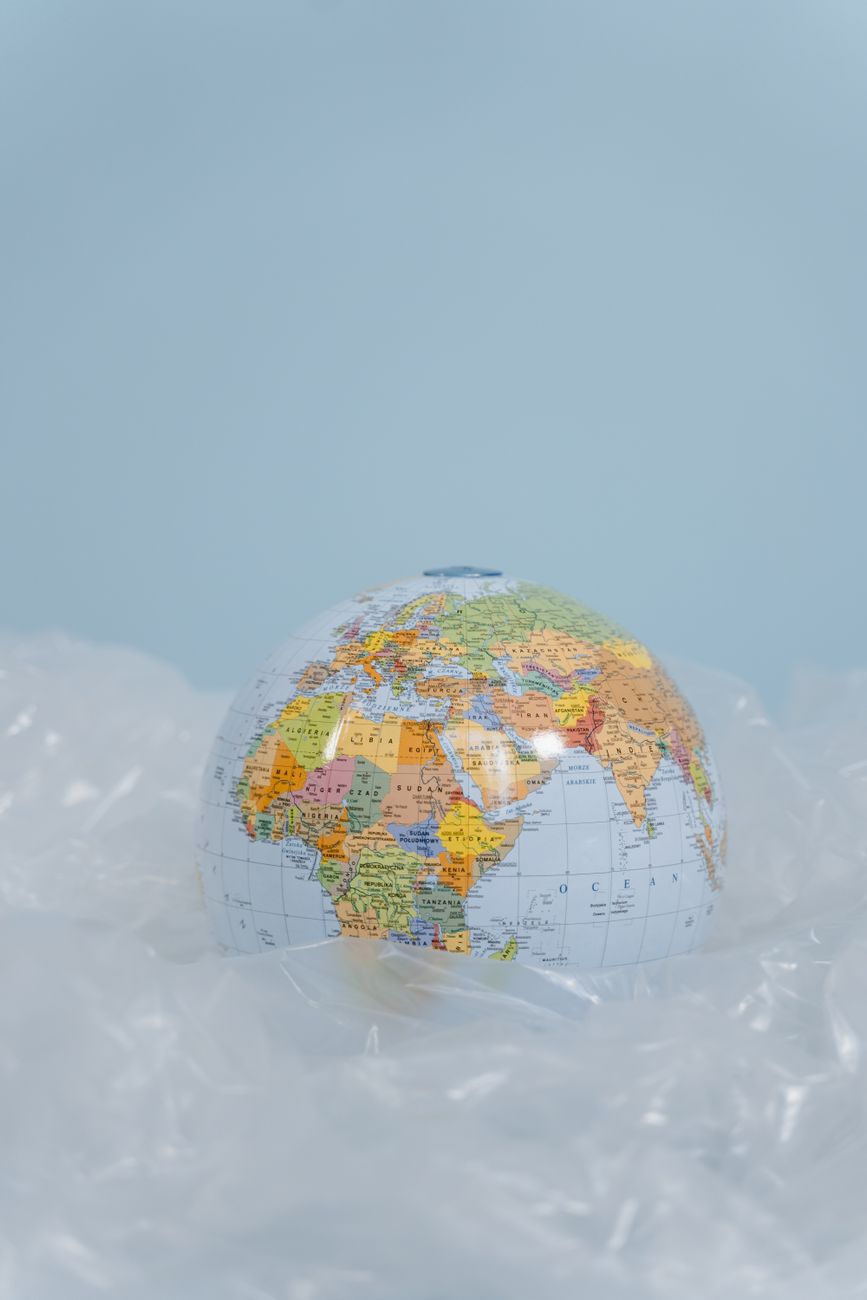
Global plastic trajectory: more than 400 million tons are produced per year, but less than 10% are recycledPhoto by MART PRODUCTION on Pexels
ScienceLeiria

Global plastic trajectory: more than 400 million tons are produced per year, but less than 10% are recycled

Meteored Portugal2 September 2026 at 09:03

More than 400 million tons of plastic are produced globally each year, but less than 10% are recycled. The transport and distribution of plastic are global processes, and a large proportion of the waste generated by human activities is composed of this material. Plastic pollution is considered one of the main problems and challenges of the current century.

The smallest plastic fragments are the most dangerous and the most difficult to reduce. As we breathe, the air that enters our lungs contains microscopic plastic particles, known as microplastics and nanoplastics. Similarly, any food or drink we consume also contains traces of these particles.

Even the most isolated and untouched places on the planet have not escaped the presence of plastic. Despite years, and even decades, devoted by the developed world to implementing recycling measures for the various types of waste we generate, global recycling rates remain very low.
Related articles

Science

Hospital de Aveiro premieres orthodontic operation

Hospital de Aveiro performed for the first time a surgically assisted maxillary expansion, through a Stomatology surgical team led by clinicians Pedro Ferraz, Joana Barata Paiva and Rodrigo Azevedo. The intervention used piezoelectric surgery, a minimally invasive technique that allows precise and controlled osteotomies, minimizing trauma to adjacent tissues. This procedure is indicated for adults with transverse deficiencies of the upper jaw, when orthodontic expansion alone is not sufficient. ULS RA considered the operation an important milestone that reinforces the differentiated capacity of the team and the commitment to innovation and modern surgical techniques.

NotíciasdeAveiro.pt02/09/26, 10:39
Science

ICBAS Professor Awarded the Miriam Friedman Ben-David Prize

João Silva Nunes, guest assistant professor at the Institute of Biomedical Sciences Abel Salazar (ICBAS) of the University of Porto, was awarded the 2026 Miriam Friedman Ben-David Prize for Developed Countries by AMEE – The International Association for Health Professions Education. This award recognizes professionals who stand out as "New Educators" in health professions education. In addition to teaching at ICBAS, Nunes serves on the Executive Committee of the Medical Education Office and coordinates the Biomedical Simulation Center. He is also a PhD candidate in Medical Sciences, with research focused on the competencies of health professions educators. Created in 2008, the prize includes a monetary value of 1,000 pounds, a certificate, and the possibility of leading a webinar in the AMEE program.

Notícias Portugal02/09/26, 10:30
Science

Recognition in Science: L'Oréal Honor Medals for Four Portuguese Researchers

In the 22nd edition of the L'Oréal Honor Medals for Women in Science, four Portuguese researchers — Ana Filipa Cruz Esteves, Cláudia de Freitas Martins, Fátima Eduarda Oliveira Santos and Inês Sofia Moutinho Alves — were distinguished for their impact in the areas of health and marine sustainability. The selection was made by a scientific jury led by Alexandre Quintanilha, and each winner will receive a prize of 15 thousand euros at the ceremony on September 16 at Teatro da Luz, in Lisbon. The initiative, a partnership between L'Oréal Portugal and the Foundation for Science and Technology (FCT), has already supported more than 70 researchers in Portugal and aims to promote inclusion and gender diversity in science.

Notícias Portugal02/09/26, 10:29
Cada respiración deja su propia firma en el cerebro
Science

Each breath leaves its own signature in the brain

A group of neuroscientists from the University of California in San Diego is investigating whether the small variations between each breath — differences in duration, slope, and pauses — have any measurable reflection in the brain's electrical activity. These researchers' interest centers on respiratory variability and how distinct breathing patterns may influence or reflect neuronal activity.

El Periódico Mediterráneo - General02/09/26, 10:17