The land from Infraestruturas de Portugal next to Coimbra Nova Station will be transferred to the Municipal Council to create housing "at affordable costs". The Minister of Infrastructure and Housing, Miguel Pinto Luz, announced that the process has already been initiated by IP and that Estamo, the company managing State property, is capable of evaluating it. The land, located next to the deactivated railway line that gave way to the Metrobus, should be the stage for an urban "transformation", ensuring that the investment in transport has a greater impact on the territory.
The mayor of Coimbra, Ana Abrunhosa, stated that the goal is to hand over the land to the municipality so that an "execution unit" can be created, with a "great focus on affordable cost housing", but also with a percentage dedicated to services such as supermarkets, cultural spaces and cafés.
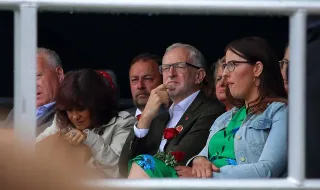
The inauguration ceremony for Metrobus circulation to Coimbra-B and Praça da República was shortened due to a protest by about 30 people, called by the Coimbra Union of Trade Unions and the Movement of Users of Public Services. The protesters criticized the price of the intermodal pass, the lack of free travel on the connection between Coimbra-B and Nova Station, and the possibility of privatization of the Municipal Services of Urban Transport of Coimbra. Ana Abrunhosa acknowledged that the last week was "very difficult" and promised to correct what is not working.
Leonel Serra, president of Metro Mondego, announced that phase C, connecting to the Coimbra University Hospitals and the Pediatric Hospital, is scheduled to open at the end of the first quarter of 2027. The Government has also commissioned Metro Mondego to carry out studies and projects necessary for the expansion of the system on two new urban sections: Coimbra-Condeixa Nova and Coimbra-Cantanhede-Mealhada.