Hydrogel allows localized application of chemotherapyPhoto by YvonneHuijbens on Pexels
Science

Hydrogel allows localized application of chemotherapy

Observador9 September 2026 at 08:39

A new soft and injectable hydrogel was developed to allow the localized application of chemotherapy. The material is made with natural polymers and demonstrated antitumoral activity in pre-clinical models. In the tests carried out, the hydrogel showed efficacy against ovarian cancer and glioblastoma. This approach aims to improve the precision of oncological treatment, concentrating the medications directly in the affected areas.

Related articles

Science

Volcanic alert raised to V1 at Furnas volcano

The Azores Seismovolcanic Information and Surveillance Centre (CIVISA) raised the volcanic alert to level V1 at Furnas volcano, on São Miguel island, due to an increase in seismic activity recorded in the region, indicating that the volcanic system is in a metastable equilibrium phase.

Açoriano Oriental09/09/26, 10:37
El ascensor de Einstein revela su secreto cuántico: detectan la “huella” de la caída libre
Science

Einstein's elevator reveals its quantum secret: the "footprint" of free fall detected

A quantum experiment managed to detect for the first time the "footprint" of free fall in subatomic particles, revealing what happens when Einstein's famous elevator—his happiest idea about the equivalence between free fall and the absence of gravity—is applied to quantum objects. Scientists managed to observe how a quantum particle responds when in free fall, opening a new window to understanding the interface between general relativity and quantum mechanics, two pillars of modern physics that have not yet been fully reconciled.

El Periódico Mediterráneo - General09/09/26, 10:17
Há misteriosos hexágonos no fundo do mar. Portugal tem pistas com 520 milhões de anos
Science

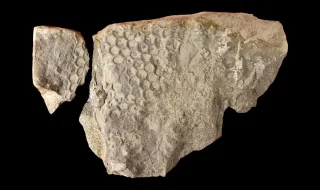
There are mysterious hexagons on the seafloor. Portugal has clues from 520 million years ago

Scientists investigate the mystery of hexagonal patterns etched on seabeds around the world, known as Paleodictyon, which appear in Cambrian ocean sediments 520 million years old in Portugal and also in today's oceans. A Portuguese fossil helped identify that these honeycomb-like galleries were likely excavated by small arthropods, and the hexagonal shape may have functioned as a communication network between the animals. The mystery about the origin of these patterns has intrigued geologists since the 18th century.

ZAP Notícias09/09/26, 10:00
Science

Excavations in the Alto Alentejo reveal connections to the Roman Orient

Archaeological excavations coordinated by the University of Évora in the Alto Alentejo, at Santa Vitória do Ameixial (Estremoz) and at Horta da Torre (Fronteira), are revealing that the Roman presence in the region was more significant and diverse than previously thought, challenging the traditional idea that the Alentejo was only a peripheral zone of the Roman Empire. The works, involving students from various Portuguese universities, have allowed the identification of remains that demonstrate connections to the Roman Orient.

DianaFM09/09/26, 09:40