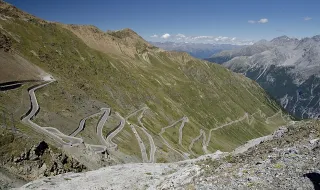
The Strait of Hormuz blockade reduces China's CO2 emissions, the world's largest polluter
Science
США
Военный конфликт
Энергетика
Vila Real

The Strait of Hormuz blockade reduces China's CO2 emissions, the world's largest polluter

El Periódico Mediterráneo - General9 September 2026 at 06:56

China's carbon dioxide emissions fell again in the second quarter of the year, according to the latest available statistics. This is the first case in which the country's emissions have decreased due to lower oil consumption, with a dramatic drop in Chinese demand for crude imports.

This situation is a consequence of disruptions in maritime traffic in the Strait of Hormuz, caused by the war between the United States and Iran. The blockade of this maritime route, one of the world's main oil transportation routes, significantly affected China's crude imports.

China is considered the world's largest polluter, responsible for a large share of global CO2 emissions. The reduction in its emissions, although driven by geopolitical factors, represents a significant impact on global environmental pollution data.

Related articles

Science

Primary Biliary Cholangitis: the importance of early diagnosis and timely treatment | By João Madaleno

Marked on 13 September, International Primary Biliary Cholangitis (PBC) Awareness Day raises awareness of this chronic autoimmune liver disease, which mainly affects middle-aged women and remains underdiagnosed due to its non-specific initial symptoms such as fatigue, itching, and dry eyes/mouth. The progressive destruction of bile ducts can lead to bile accumulation in the liver, inflammation, fibrosis, and in advanced cases, cirrhosis and liver failure. Early diagnosis, based on blood tests and liver function tests, is essential to start timely treatment and prevent disease progression. In addition to pharmacological treatment, symptom management, psychological support, and adopting healthy lifestyle habits are essential to improve patients' quality of life.

Postal do Algarve09/09/26, 07:30
Descoberto chão em Marte que parece ter… favos de mel
Science

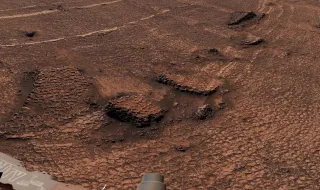
Discovered ground on Mars that appears to have... honeycomb

NASA's Curiosity rover discovered an extensive area of fractures with a honeycomb-like pattern on the surface of Mars, in Gale Crater. The images reveal thousands of small polygonal shapes extending across the terrain, each measuring just a few centimeters. This discovery occurred almost 14 years after the spacecraft vehicle began its mission on the red planet.

ZAP Notícias09/09/26, 07:00
Science

More steps reduce early death risk, but walking pace also matters

New research has revealed that it is not only the number of daily steps that contributes to reducing the risk of early death, but also the pace of walking. The study shows that people who walk with greater intensity, even if they take fewer steps, obtain superior health benefits compared to those who walk more steps but more slowly. This discovery highlights the importance of considering the speed and intensity of physical activity, in addition to the total volume of daily movement, as a determining factor for longevity.

Euronews Portugal09/09/26, 06:09
Science

The Quartz Museum and Professor Galopim de Carvalho

The Quartz Museum, located on Monte de Santa Luzia, on the outskirts of Viseu, features the Galopim de Carvalho Interpretation Centre, inaugurated in 2012, dedicated to the memory of the Portuguese geologist and museum curator. The archaeological excavations carried out on the site showed that quartz mining in the area dates back to the Bronze and Iron Ages, demonstrating a long mining tradition in the region.

Observador09/09/26, 06:02