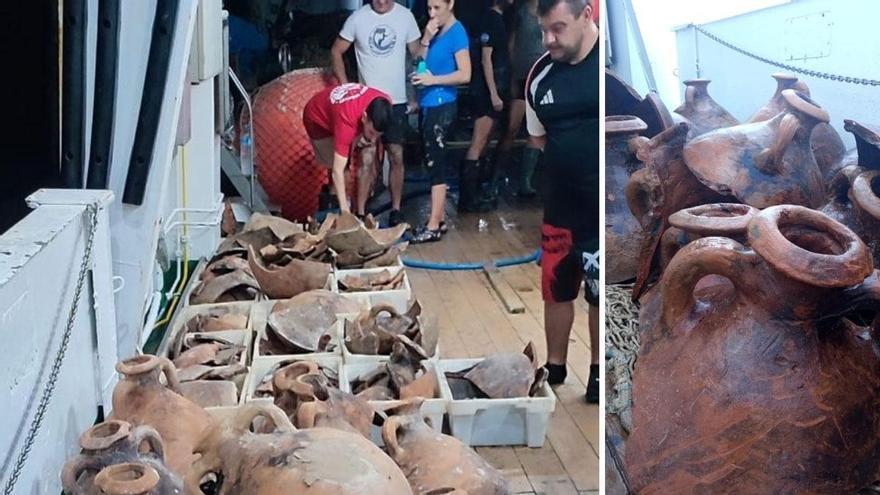
An unprecedented catch: the Vigo-based oceanographic vessel "Miguel Oliver" catches dozens of Roman amphorae south of Formentera
Science
Транспорт
Инвестиции
Космос
Vila Real

An unprecedented catch: the Vigo-based oceanographic vessel "Miguel Oliver" catches dozens of Roman amphorae south of Formentera

El Periódico Mediterráneo - General4 September 2026 at 14:25

The Vigo-based oceanographic vessel Miguel Oliver, belonging to the General Secretariat for Fisheries, caught dozens of Roman amphorae south of Formentera during a survey mission. This discovery represents an extraordinary catch for a vessel dedicated to fishery research, which was not prepared for this type of archaeological discovery.

Miguel Oliver is one of three oceanographic vessels of the General Secretariat for Fisheries, together with the units Vizconde de Eza and Emma Bardán. Built at the now-defunct MCíes shipyard, the ship was launched in 2007, is 70 meters long by 14.4 meters wide, and has a capacity for 45 crew members. Its home port is in Vigo.

Last summer, Miguel Oliver was tasked with the 18th edition of the MEDIAS campaign (Mediterranean International Acoustic Survey), whose main objective was to assess the biomass of the breeding stock of anchovy and sardine in the Mediterranean.

The discovered Roman amphorae will now be subject to study and preservation, representing valuable evidence of maritime trade activity in ancient Rome. The discovery demonstrates how scientific marine research campaigns can unexpectedly reveal submerged historical heritage remains.


Related articles

Science

University of Coimbra is "very strong" in the Portuguese-speaking world

The University of Coimbra is recognized as an institution of great prestige in the Portuguese-speaking world, welcoming thousands of students from Portuguese-speaking countries. The university maintains strong ties with Portuguese-speaking communities around the world.

Notícias de Coimbra04/09/26, 15:41
Science

Idiopathic pulmonary fibrosis: lack of awareness and late diagnosis continue to be challenges

Idiopathic pulmonary fibrosis (IPF), one of the most frequent and serious fibrotic diseases of the interstitium, has a median survival of only 3 to 5 years after diagnosis when untreated. On World Disease Day, celebrated on September 7th, the Portuguese Society of Pulmonology alerts that lack of awareness and late diagnosis remain the main challenges, emphasizing the need for greater awareness to enable earlier interventions.

PT Jornal04/09/26, 15:23
Science

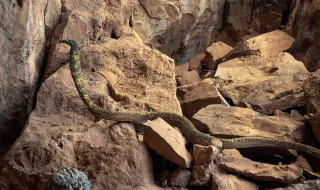
What species is this: ladder snake

A reader found a snake in Águeda, Aveiro, on August 29, and asked for help identifying the species. Herpetologist Diogo Parrinha responded that it is a ladder snake (Zamenis scalaris), completely harmless. This species can reach up to 160 centimeters and is the second snake with the largest distribution area in Portugal, being well distributed throughout the mainland territory up to 800 meters altitude. It is more visible between April and October, preferring habitats such as open oak and cork oak woodlands, especially in agricultural landscapes.

Wilder04/09/26, 15:13
Science

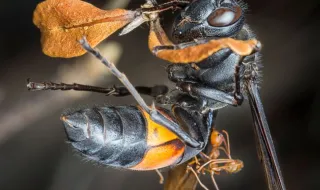
What species is this: wasp of the family Evaniidae

A reader photographed an insect in Monte Gordo, in the Algarve, and sent the image to the Wilder website for identification. Specialist Rui Andrade identified the animal as a wasp from the Evaniidae family, parasitic wasps specialized in cockroach oothecae (egg casings). The female lays her eggs inside the oothecae, where the larvae develop feeding on the cockroach eggs. The adults have a short and robust body, with a small and narrow abdomen, and are known for oscillating their abdomen up and down when active. Although they can be found in homes, they are not known to sting or bite humans.

Wilder04/09/26, 15:03