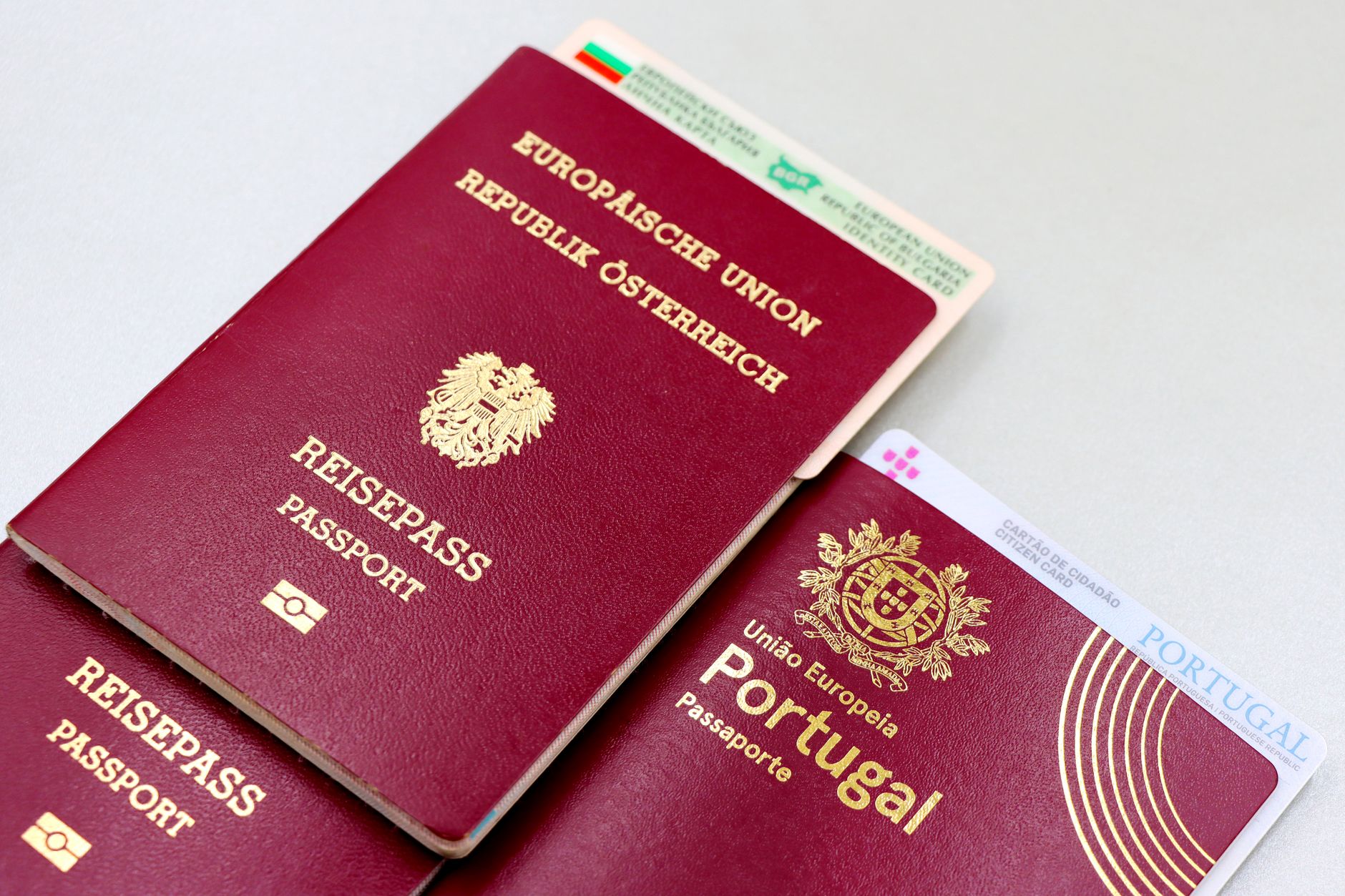
European Union awards 705 million euros to 421 young researchersPhoto by Marta Branco on Pexels
Science
Европейский союз
Образование
Экономика
Braga

European Union awards 705 million euros to 421 young researchers

Braga TV3 September 2026 at 22:10

The European Research Council awarded 705 million euros to 421 early-career researchers. The funding was granted under a call that received a record number of 4,807 applications, with only 8.8% of proposals receiving funding.

Among the beneficiaries is Nikita Melnikov, a professor at the Nova School of Business and Economics, who will develop a project on labor mobility and development. The article indicates that the funding will allow researchers to advance their research projects. The total amount distributed reflects the significant investment of the European Union in supporting young researchers at the beginning of their academic careers.

Related articles

Carros híbridos plug-in são mais poluentes do que o esperado segundo estudo
Science

Plug-in hybrid cars are more polluting than expected according to study

Plug-in hybrid cars emit up to five times more CO2 in real driving conditions than calculated by the European Union, a study revealed. The difference between real and official values raises questions about the reliability of the emissions tests used to classify these vehicles as greener.

SAPO Notícias04/09/26, 00:46
Science

The Water We Don't See

This article analyses the importance of groundwater and aquifers in Portugal as a strategic reserve in the face of drought periods and climate variability. It explains that aquifers function as natural capital, storing and releasing water over time, but that excessive extraction can cause piezometric levels to decline and saltwater intrusion in coastal areas. The article warns of tensions already visible in the Algarve, in Grândola and in Almada, where water availability limits tourism and urban development. It argues that aquifer management must balance present use with the preservation of future options, considering opportunity costs and externalities that the price of water does not reflect. In a context of climate uncertainty, keeping water in the aquifer represents security value and adaptive capacity.

Jornal Económico04/09/26, 00:15
Science

International distinction attributed by URSI to the director of DETI

Nuno Borges de Carvalho, director of the Department of Electronics, Telecommunications and Informatics at the University of Aveiro, received the John Howard Dellinging Gold Medal, awarded by the Union Radio-Scientifique Internationale (URSI), during the General Assembly and Scientific Symposium in Krakow, Poland. This is the first time the distinction has been awarded to a Portuguese person and recognizes the work and contributions of the professor and researcher for the development of SWIPT – Simultaneous Wireless Information and Power Transfer.

NotíciasdeAveiro.pt04/09/26, 00:05
Science

Portugal between the climate that has always changed and the climate we are altering

This opinion article by P. Proença Cunha addresses the issue of climate change in Portugal, arguing that the real debate is not whether the climate has changed — as it has always changed throughout history — but rather whether the speed of that change has changed and what are currently the mechanisms that control it. The author invites scientific reflection on the acceleration of climate transformations and their causes.

Público04/09/26, 00:05