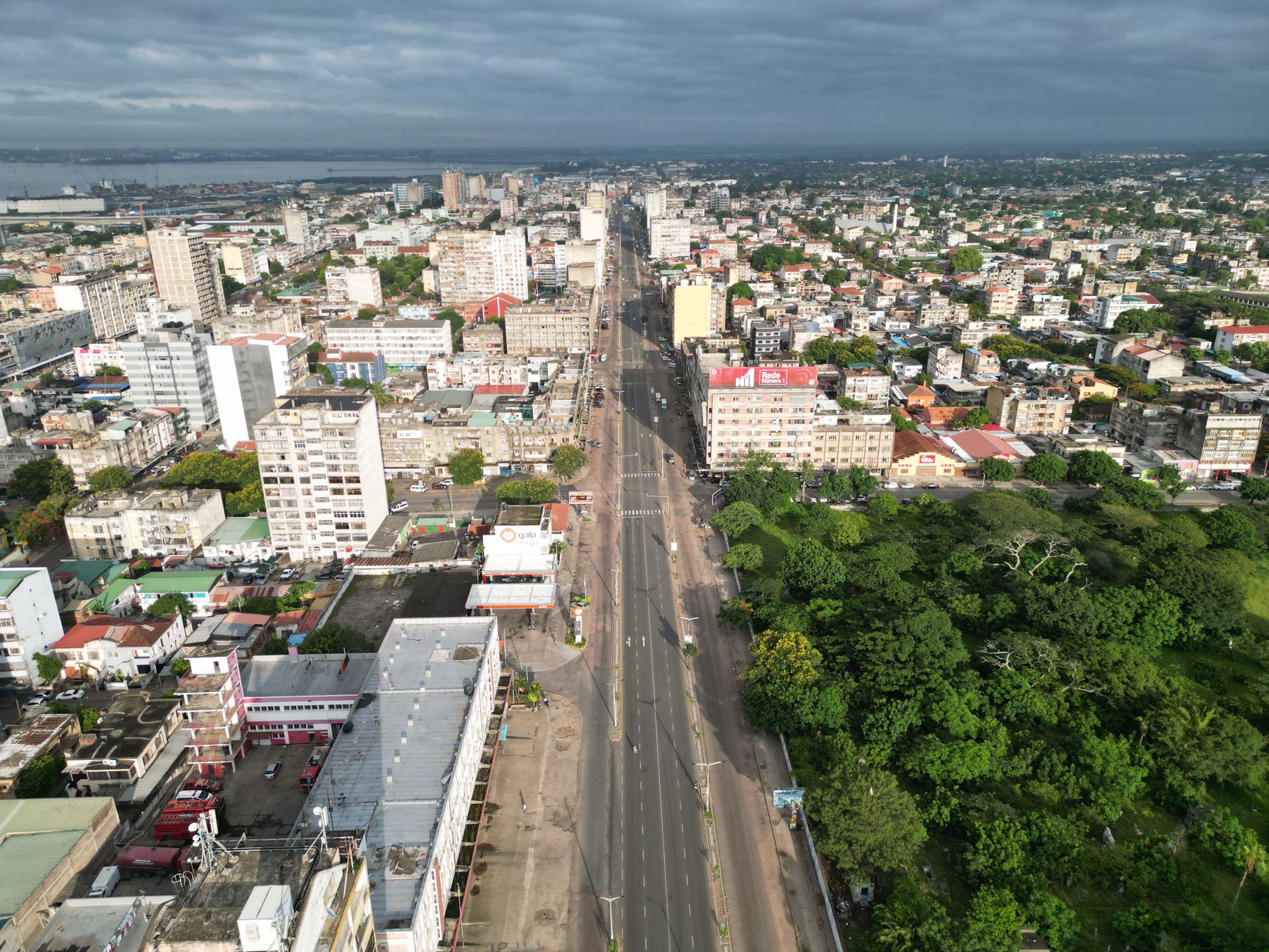
The Municipality of Maputo will review, for the first time in 18 years, the Urban Structure Plan of the Municipality of Maputo (PEUMM), approved in 2008, to adapt the Mozambican capital's planning to urban growth, mobility challenges and climate change. With about one million inhabitants, the city faces growing problems of urban expansion, pressure on infrastructure, land occupation and vulnerability to extreme climate phenomena.
The municipality launched a consulting process to support the review, aiming to have a strategic instrument "operational and implementation-oriented," capable of guiding sustainable urban growth, promoting efficient land use, strengthening integration between land use and mobility, increasing resilience to climate change, and supporting coordination of public and private investments.
The new plan will include a new territorial model for Maputo, with definition of spatial structure, centrality system, land use and occupation organization, mobility corridors and priority areas for development and environmental protection. The integration between land use planning and mobility is one of the main axes, including coordination with the MOVE/BRT System.
The process is taking place while the Mozambican government accelerates projects to improve mobility in the Metropolitan Area of Maputo, including studies for two new railway branches and the implementation of an Autonomous Rapid Transit System (ART), technology similar to a surface metro. President Daniel Chapo acknowledged that "major urban mobility challenges" remain, stating that the Government is working for the start of construction. The 2008 PEUMM was the first urban structure plan developed by the municipality itself, essentially using Mozambican specialists.