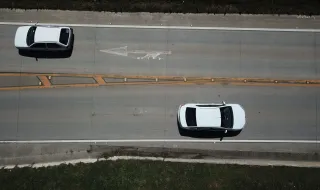
The GNR warned the population about a growing scam that simulates road traffic accidents, in which suspects cause non-existent collisions to demand immediate payments and access victims' bank accounts. In the first six months of 2026, scams involving accident simulation caused accumulated losses of 72,540 euros, approaching the total recorded throughout 2025, which was 77,480 euros. Between January and June 2026, 30 complaints were registered nationwide, representing a year-on-year increase of 15.4% compared to the 26 cases reported in the same period the previous year.
In Beira Interior, in 2025, three cases were recorded in the Guarda district and two in Castelo Branco, totaling five scams involving this type of accident simulation. In 2026, to date, only one case has been recorded in the Guarda district. Nationally, the Faro district leads the incidence in 2026 with six occurrences, followed by Lisbon, Porto, Viseu, and Beja.
The scheme is based on a calculated performance designed to exploit drivers' good faith and sense of guilt. The perpetrators follow the victim upon exiting parking lots, generally near commercial areas, using light signals and audible warnings to force a stop. Accompanied by women and children to convey a false image of tranquility, they claim urgency or the need to avoid losing insurance no-claims bonus, point to pre-existing damage or broken mirrors, and demand immediate cash payment, accompanying victims to ATMs.
Recently, criminals have modernized their approach by using portable automatic payment terminals, observing the PIN entered by the victim and surreptitiously swapping the bank card for a similar one to make illegal withdrawals. The deliberate choice of drivers over 60 years old constitutes a central strategy of the scammers, who exploit emotional vulnerability, fear of legal complications, and lesser familiarity with electronic payment methods, targeting a demographic that typically holds greater immediate financial availability.