Brazil has 14.4 million people with disabilities, but only 499 are candidates in 2026Photo by Jordan Vilas on Pexels
Politics
Образование
Выборы
Aveiro

Brazil has 14.4 million people with disabilities, but only 499 are candidates in 2026

oglobo30 August 2026 at 10:00

Brazil has 14.4 million people with disabilities, corresponding to 7.3% of the country's population. However, for the 2026 elections, only 499 candidates declared some disability to the Electoral Court, representing about 2.4% of total candidacies. This number, although low, represents an evolution compared to the 1.6% registered in 2022, when 476 candidates with disabilities ran for elected positions.

The research was compiled by researcher Laís Silveira Costa, from the National School of Public Health Sérgio Arouca, affiliated with Fiocruz. The data reveal that, in 2022, of the 476 candidates with disabilities who ran in the elections, only eight were elected, evidencing the difficulty this portion of the population faces in achieving effective representativeness in political power.

The profile of candidates with disabilities also exposes significant inequalities. In both elections analyzed, participation is mostly composed of white men with physical disabilities. No declared candidacies were recorded from people with intellectual or psychosocial disabilities. A notable finding is the five-fold growth in the proportion of autistic candidates, which rose from 2.7% to 13.4%.

Among women, the gap between the general population and candidates is even more pronounced. Although 8.1% of Brazilian women have some disability, they represent only 1% of declared candidacies, evidencing a double exclusion: both by disability status and by gender.

Related articles

Politics

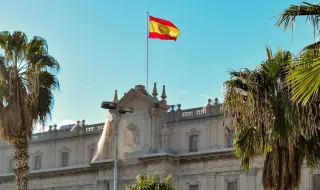
Spain approves 165 million euro emergency package for Ceuta

The Spanish Council of Ministers approved this Tuesday an emergency package of 165 million euros to respond to the migration crisis in Ceuta, a city facing a critical situation after the mass entry of immigrants in July. The plan includes a direct injection of 80 million euros into the local economy over the next four months, 70 million reserved for 2027, 15 million for commerce and tourism, 35 million for SMEs and self-employed workers, and 15 million to strengthen education, health and justice. First Vice-President Carlos Cuerpo visited Ceuta this week and committed to launching rapid-impact measures to support the productive fabric of the autonomous city.

Eco30/08/26, 13:16
Espanha vai aprovar pacote de emergência de 165 milhões para Ceuta
Politics

Spain to approve 165 million emergency package for Ceuta

The Spanish Government is set to approve an emergency package of 165 million euros for Ceuta, a measure that comes in response to the immediate needs of the Spanish city on the African continent. This amount will be added to the future expansion, in the medium term, of the Comprehensive Socioeconomic Development Plan of Ceuta, thereby reinforcing Madrid's commitment to sustainable development and economic stability of that enclave.

Jornal de Negócios30/08/26, 13:09
"É uma questão de competitividade": Governo quer reforçar investimento na Educação e continuar “caminho correto” da digitalização
Politics

"It is a question of competitiveness": Government wants to strengthen investment in Education and continue the "correct path" of digitization

Prime Minister Luís Montenegro closed the PSD Summer University, reiterating the Government's intention to strengthen investment in Education, classifying it as a matter of competitiveness. In his speech, Montenegro highlighted the continuity of the "correct path" of digitization in the education sector, emphasizing the reforms implemented by the executive in the area.

SIC Notícias30/08/26, 13:03
Politics

The offensive of Diário do Sousa against the ferry

Diário do Sousa, through its morning newspaper Diário de Notícias, is leading a systematic campaign against the ferry service to Madeira, using partial studies and alarmist headlines to discredit the maritime operation. The article denounces that the only shipowner consulted in a report on the ferry was precisely Grupo Sousa, the owner of the newspaper itself and holder of the monopoly on cargo transport to the Region, while other international shipowners simply "did not respond" or "contact was not possible." The coverage includes biased editorials and invites local political figures for apparent plurality, but always framed to validate the business group's narrative. The author warns that the Madeiran political and social system continues to participate in this media ecosystem, feeding its own vanity, while Mr. Sousa's monopoly remains untouchable and the competition authority sees nothing.

Madeira Opina30/08/26, 12:34