All news
Politics
Business
Technology
Incidents
Sports
Weather
Science
Entertainment
World
Real Estate
AI News
Personal preference should be the criterion for choosing exercise for a young person who wants to lose weightPhoto by Liliya_Arslanova on Pexels
Science
Education

Personal preference should be the criterion for choosing exercise for a young person who wants to lose weight

oglobo15 September 2026 at 11:18

The student Maria Giulia Fantin Cesso, 13 years old, practices volleyball intensely, but it wasn't always like that. At age 10, she was overweight and presented elevated insulin and cholesterol levels in the tests requested by the pediatrician, which frightened her family. At that time, Maria Giulia practiced swimming, but without any enthusiasm.

The family sought changes in the girl's diet and routine, and it was during this period that she discovered volleyball, a sport that became her passion. Currently, she trains two hours a day, four times a week, in addition to competing on Saturdays and Sundays.

Maria Giulia reports that before she didn't usually practice physical activities and that the sport brought benefits beyond physical health. She highlights that volleyball helped her socialize, make friends, and work more on teamwork. With nutritional monitoring and the combination of healthier eating and intense training, she managed to lose five kilograms.

The mother of Maria Giulia, the lawyer Elaine Fantin, celebrated her daughter's transformation. The article highlights that personal preference should be an important criterion when choosing exercises for young people who want to lose weight, since motivation and enjoyment of the sport make a difference in adherence to regular physical activity practice.

Why this matters

The region faces challenges with childhood obesity and metabolic health. This article offers a practical example of success in treating overweight adolescents, demonstrating how the choice of a sports activity aligned with personal interests can generate effective results in weight loss and improvement of health indicators such as insulin and cholesterol.

About this summary

This is our short summary of a report published by oglobo on 15 September 2026 at 11:18; the full text stays with the publisher. In our feed it sits under Science. We currently carry 4673 items in that section.

All items in this section →
Source

Related articles

Science

Zoo de Lourosa with 20 new chicks of 11 bird species

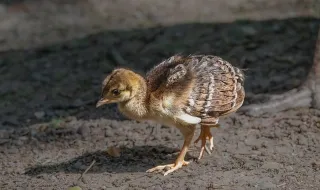
Zoo de Lourosa, in Santa Maria da Feira, has recorded 20 new chicks of 11 bird species, including two Bali mynas, a species classified as "Critically Endangered" by the IUCN, whose reproduction is particularly significant for the country's only ornithological park. The zoo also celebrated the first breeding of Decken's hornbill and violet turaco, a milestone that reflects its dedication to bird care and conservation mission. The new chicks can be observed in their habitats, and visitors are asked to respect distances and observe quietly, given the period of greater vulnerability.

NotíciasdeAveiro.pt15/09/26, 12:28
Universidade de Coimbra cria programa de intervenção psicológica para mulheres na menopausa
Science

University of Coimbra creates psychological intervention program for women in menopause

A research team from the University of Coimbra developed the program "Cuidar-ME – Self-care during Menopause", a psychological intervention aimed at women in the menopausal transition, with the objective of helping them cope with the physical and emotional challenges characteristic of this phase. The program is currently being tested.

SAPO Notícias15/09/26, 12:06
Science

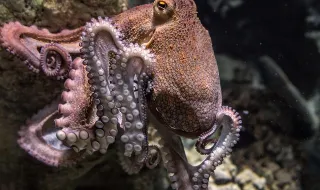
Tons of squid: the North Sea is warming and now octopuses are also arriving

The warming of North Sea waters by approximately 4°C over the last century is transforming the marine ecosystem and fishing activity in the region. Species such as octopuses and squid, which were rarities nine years ago, now represent one-fifth of Belgian fishermen's catches, replacing traditional species like crabs and cod. Hans Polet, from the Flemish Institute for Agricultural and Fisheries Research, explained that the higher temperature created ideal conditions for octopus reproduction, as their eggs require water temperatures between 9 and 11°C to develop, profoundly altering the region's food chain.

Meteored Portugal15/09/26, 12:04
As três regras da felicidade (de acordo com Harvard)
Science

The three rules of happiness (according to Harvard)

The article addresses happiness as something essential but difficult to achieve, suggesting that we often look for it in the wrong places, and mentions that Harvard Medical School has research that ensures happiness is within everyone's reach.

Correio da Manhã15/09/26, 11:59