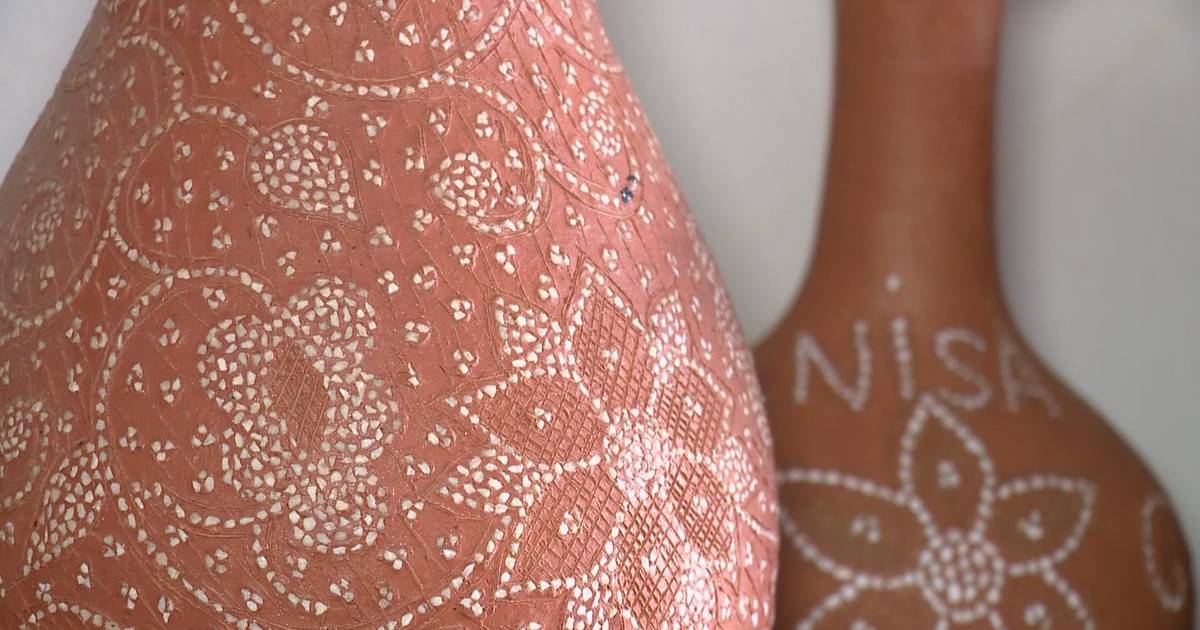
The pottery of Nisa, a tradition with deep roots in the region, continues to be kept alive through the work of local artisans. The clay of Nisa originally had a utilitarian function, serving to transport water from the springs to the homes and fields of the region.
Among the artisans who keep this tradition alive is Batata, whose work represents the continuity of an art that has been passed down from generation to generation. His hands give shape to the clay, transforming it into pieces that tell stories of the community.
Although the original practical function of Nisa pottery — the transport of water — is no longer necessary due to modern infrastructure, the tradition persists as an artistic and cultural expression. The clay pieces have now become decorative items that preserve the memory and identity of the region.
The article suggests that, in Batata's hands, the pottery of Nisa continues to be a form of cultural resistance, keeping alive an important part of the intangible heritage of this area of the country.