All news
Politics
Business
Technology
Incidents
Sports
Weather
Science
Entertainment
World
Real Estate
AI News
After losing son, 54-year-old woman becomes mother thanks to embryo frozen for 22 years
Science

After losing son, 54-year-old woman becomes mother thanks to embryo frozen for 22 years

SIC Notícias12 September 2026 at 21:22

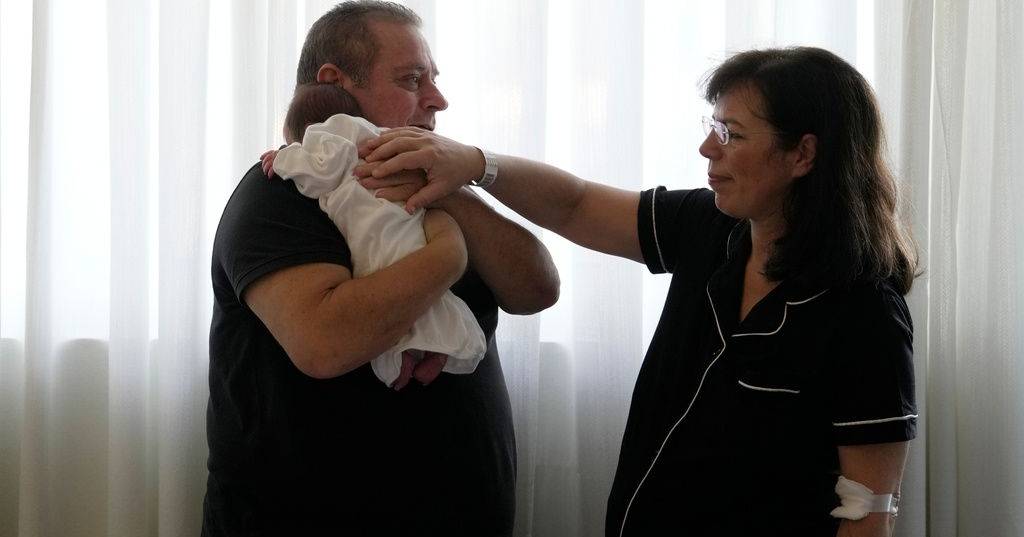
After losing their 21-year-old son, Cristina Rapti-Tzelepi, 54, and her husband decided to use an embryo that had been frozen for more than two decades. The Greek couple found in assisted reproduction a way to overcome the devastating loss of their son.

The embryo used had been preserved for more than 22 years, having been donated by another couple who underwent fertility treatment. After the embryo transfer procedure, the mother was able to successfully carry the pregnancy to term.

Georgia was born this Wednesday in Athens, weighing 3.490 kilos. The birth represents a medical milestone, being considered one of the cases of longest embryo freezing time that resulted in a successful birth.

The story of the Greek couple illustrates both the advances in reproductive medicine and the emotional impact that the loss of a child can have on family decisions to seek a new pregnancy at advanced maternal age.

Why this matters

This story illustrates the significant advances in assisted reproduction technology and the possibility of using frozen embryos for decades. Although it is a human interest story about hope after loss, it does not represent immediate practical changes for readers, but demonstrates the growing capabilities of reproductive medicine.

About this summary

This is our short summary of a report published by SIC Notícias on 12 September 2026 at 21:22; the full text stays with the publisher. In our feed it sits under Science. We currently carry 4452 items in that section.

All items in this section →
Source

Related articles

Science

Several vertebrae of a giant dinosaur discovered in the Cabo Espichel area

Several vertebrae of a giant herbivorous dinosaur were discovered in the Cabo Espichel area, in Portugal, representing the most complete set of fossilized remains of a Cretaceous dinosaur ever found in the country. The fossils date back 125 million years and belong to a sauropod, a group of large dinosaurs. The scientists responsible for the discovery will now carry out analyses to determine which specific species the remains belong to.

TVI Notícias12/09/26, 21:33
Fezes humanas transformadas podem substituir o cimento e tornar o betão mais resistente
Science

Human waste transformed can replace cement and make concrete stronger

A team of researchers managed to transform human fecal sludge into biochar and incorporate it into concrete, achieving significant improvements in its mechanical properties. The study, published in Scientific Reports, used waste from a treatment plant in Warangal, India, which was dried and subjected to pyrolysis before being added to concrete.

ZAP Notícias12/09/26, 21:30
Crosta terrestre está a abrir-se como um fecho de correr sob Itália
Science

Earth's crust is opening like a zipper under Italy

A team of geologists discovered that the Earth's crust under Italy is opening in a similar way to a zipper, which may explain the contradictory movements observed in the country's mountains. This research suggests that the region is undergoing a complex geological process that challenges previous theories about the formation of the Apennines.

SAPO Notícias12/09/26, 21:25
Science

Climate change. Study reveals that young people are worried about the future

A study reveals that Portuguese young people are genuinely concerned about the effects of climate change, but face significant difficulties in converting this concern into practical actions in their daily lives.

RTP Notícias12/09/26, 21:20