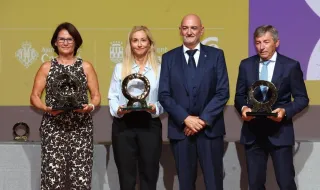
The Sonae Educação Prize distinguished this Thursday six educational projects with a total of 150 thousand euros, in the fourth edition of the initiative. The winners were selected from over a thousand applications, making this the most participated edition ever. The projects stand out for their ability to respond to concrete educational challenges, through approaches that promote inclusion, personalization of learning, development of digital and socio-emotional skills, pedagogical innovation, and the creation of safer and more participatory educational environments.
In the General Category, the prizes went to the No Bully Portugal Association, with the +Empati@ project that integrates bullying and cyberbullying prevention into programming learning and digital citizenship; Aproximar – Social Solidarity Cooperative, with DigiLab that develops digital, socio-emotional, and employability skills with young people at the Leiria Prison; and Kaizen Education, with the Continuous Improvement in Public Schools project that applies optimization methodologies to reduce bureaucracy and free up teachers' time.
In the new Public Schools Category, the winners were the Pedro Eanes Lobato School Grouping, with a project that adapts learning pathways to each student's needs; the Águeda School Grouping, with a project of peer mentoring to reinforce academic success and socio-emotional skills; and the Kindergarten Schools of the Castro Verde School Grouping, with a project that introduces educational robotics and STEAM methodologies in preschool education. Miguel Mota Freitas, Chief Representative for Culture & Education at Sonae, stated that the six projects show that in Portugal there are concrete responses with transformative potential for some of the main challenges in Education.
The winners were announced at the Serralves Foundation in Porto, at an event that included the conference "Smart Education: the future of learning in the AI era". Since the creation of the prize in 2023, 550 thousand euros have been awarded to initiatives with impact on education, with the four editions having received over 2,200 applications. The six projects now join the Sonae ecosystem, benefiting from specialized follow-up, mentorship, and support in implementation and impact monitoring.