Haemorrhoids in pregnancy should not be seen as inevitable
SciencePortalegre

Haemorrhoids in pregnancy should not be seen as inevitable

Noticias de Arronches9 September 2026 at 19:22

On the occasion of World Pregnancy Day, celebrated on 9 September, specialists warn of the need to demystify Haemorrhoidal Disease during pregnancy and the postpartum period. The goal is to inform women that this condition should not be accepted as an inevitable consequence of gestation.

It is estimated that 30% to 40% of pregnant women in Portugal are affected by haemorrhoids, although the actual numbers may be even higher. This underestimation is mainly due to the embarrassment many women feel in speaking about the subject, which hinders diagnosis and appropriate treatment.

Symptoms include pain, itching, discomfort and anal bleeding, and may appear especially from the second trimester of pregnancy. These signs are frequently associated with the pressure exerted by the growing uterus and the hormonal changes characteristic of this phase.


Related articles

Science

Buried Underwear, Stolen Candy and Improbable Science: Switzerland Is the Ig Nobel Capital

Zurich, Switzerland, has become the new home of the Ig Nobel Prize, which celebrates unusual scientific research that "makes us laugh and then think." Among the highlighted stories from this edition are studies involving underwear buried in soil and stolen candy, exemplifying the kind of improbable and humorous science that characterizes the event. The prize continues to recognize discoveries that, although initially comical, often reveal genuine scientific insights.

Público09/09/26, 20:36
Science

The Funchal Broadcasting Station and SESARAM launch the podcast "Conversas com Saúde" (Health Conversations)

The Posto Emissor do Funchal (PEF), in partnership with SESARAM, launched the podcast "Conversas com Saúde" (Health Conversations), dedicated to topics of prevention, well-being, and healthcare. The first episode, titled "September: Time to (RE)Start", featured doctor Ana Teixeira and nurse Luísa Barcelos, who shared recommendations to help children, young people, and families make the transition back to work and school in a more balanced way, recovering healthy habits after the vacation period.

Jornal da Madeira09/09/26, 20:01
Fruta inteira ou triturada? Jovens investigam resposta glicémica na FCNAUP
Science

Whole fruit or crushed? Young people investigate glycemic response at FCNAUP

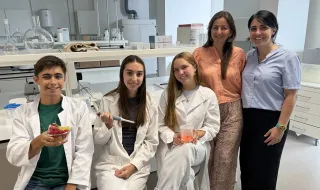
Three young secondary school students — Vitória Figueiredo, from Viseu, Yasmin Dias, from Porto, and Nelson Santos, from Gondomar — participated as researchers at the Faculty of Food Sciences and Nutrition of the University of Porto (FCNAUP), between August 31st and September 5th. During that week, the students, aged 16 and 17, conducted a study on the glycemic response of consuming whole fruit versus crushed fruit, investigating how the form of fruit preparation can influence blood sugar levels.

SAPO Notícias09/09/26, 19:56
Science

Very hot drinks can increase the risk of this deadly disease by up to three times

A recent study reveals that consuming very hot drinks, such as coffee or tea, can increase the risk of developing esophageal cancer by up to three times. Researchers warn that temperatures above 60°C can cause thermal damage to esophageal cells, especially when consumed regularly. The World Health Organization had already classified drinks above 65°C as probably carcinogenic. Experts recommend letting drinks cool down a bit before consuming and avoiding excessively frequent consumption of liquids at high temperatures.

Notícias de Coimbra09/09/26, 19:52