UTAD develops biostimulants for more sustainable cherry productionPhoto by jackylam on Pexels
Science
Образование
Vila Real

UTAD develops biostimulants for more sustainable cherry production

A Voz de Trás-os-Montes9 September 2026 at 14:18

The University of Trás-os-Montes and Alto Douro (UTAD), through the Centre for Research in Environmental and Life Sciences and Technologies (CITAB), is developing natural biostimulants for more sustainable cherry production. The project, called BIOsCherry – Innovation and Sustainability in Cherry Production with Natural Biostimulants, is coordinated by researcher Berta Gonçalves and has funding from the "la Caixa" Foundation totaling 307,437.49 euros, of which 149,616.49 euros are destined for CITAB/UTAD.

Initiated in January 2024, the project has a duration of 36 months and aims to valorize endogenous resources to create natural products capable of helping cherry trees respond to adverse environmental conditions. The new biostimulants should increase tree tolerance to different stress situations, contributing to improving productivity and fruit quality.

The work spans from the development of new biostimulants through scalable and environmentally sustainable production processes, to the evaluation of cherry quality and bioactivity. The most promising products will subsequently be tested in cherry orchards in Trás-os-Montes and Fundão, where the impact on tree physiology, adaptation to environmental conditions, productivity, and production quality will be evaluated.

Although the project is focused on cherry tree cultivation, the developed solutions could, in the future, find application in other fruit trees such as apple trees, pear trees, and peach trees. BIOsCherry aims to combine innovation, circular economy, and valorization of endogenous resources, seeking to contribute to the sustainable development of producing regions and to the transfer of scientific knowledge to the agricultural sector.


Related articles

Science

What aesthetics doesn't tell you about nail health

The article addresses the health risks for nails associated with beautification techniques such as gel and permanent varnish. Dermatologists Dr. António Massa and Dr. Rita Guedes warn about the negative effects these aesthetic procedures can have on nail health, although many people are unaware of these concerns.

Observador09/09/26, 15:54
Science

Pediatrician reinforces: these are the 5 pieces of advice that were given 30 years ago and make no sense today

Pediatrician João Rio Martins identified five childcare practices that were common 30 or 40 years ago and that no longer make sense today due to new scientific evidence. Among them are: placing the baby to sleep on their stomach (currently the recommendation is on their back), using talcum powder during diaper changes (risk of inhalation), using baby walkers (they do not advance walking and increase the risk of accidents), using rigid footwear (preferring barefoot walking and flexible footwear) and giving water to babies before food introduction (unnecessary and potentially harmful). The doctor highlighted that the evolution of recommendations is due to the emergence of new studies and better understanding of risks and benefits, acknowledging that some current guidelines may also be revised in the future.

Postal do Algarve09/09/26, 15:40
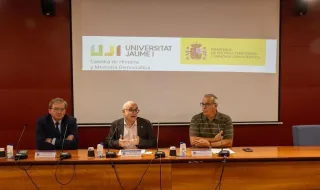
La UJI apuesta por una Cátedra de Historia y Memoria Democrática
Science

UJI commits to a Chair of History and Democratic Memory

Universitat Jaume I presented the Chair of History and Democratic Memory, a structure aimed at promoting research, training, dissemination and knowledge transfer in this field.

El Periódico Mediterráneo - General09/09/26, 15:35
Science

Polytechnic University of Viseu Promotes European Sustainable Development Week

The Polytechnic University of Viseu promotes, between September 22 and 24, the European Sustainable Development Week, an initiative integrated within the European Sustainable Development Week that mobilizes the academic community for the UN 2030 Agenda and the 17 Sustainable Development Goals. The program includes workshops on SDGs, sustainability in the classroom, round tables, circular economy initiatives, gender equality, pollution combat, and various practical workshops, such as paper recycling and textile upcycling. The programming runs in parallel with the European ESDW, which this year takes place between September 18 and October 8, and since 2015 has already registered more than 50,000 events across Europe.

Jornal do Centro09/09/26, 15:34