Portuguese researchers help distinguish who plays "for pleasure" and who can no longer stop
Science

Portuguese researchers help distinguish who plays "for pleasure" and who can no longer stop

SAPO Notícias7 September 2026 at 13:21

Researchers from ISPA – Instituto Superior de Psicologia Aplicada, in Lisbon, conducted a new study with the aim of understanding why some people can play for hours without problems while others lose control. The research sought to find ways to distinguish who plays "for pleasure" from those who can no longer stop.

The study identified clues that can help make this distinction between recreational players and those who develop gambling-related problems. The researchers analyzed the behaviors and patterns that differentiate these two groups of people.

This research comes in the context of growing concern about gambling addiction, particularly at a time when online gambling has become increasingly accessible. The results may contribute to earlier and more effective interventions.


Related articles

Science

Device reduces children's discomfort during vaccination

The Local Health Unit of Barcelos-Esposende implemented the use of devices that aim to reduce pain and discomfort in children during the vaccination process, providing a less traumatic experience for younger patients.

RTP Notícias07/09/26, 14:30
Science

Pilot project detects poor air quality in 12 schools

A pilot project to monitor air quality in 12 schools revealed significant problems, using portable itinerant stations equipped with specific sensors to detect atmospheric pollutants. The initiative allowed the collection of detailed data on air quality levels in the participating educational establishments.

Observador07/09/26, 14:11
Science

Researchers want to search for possible traces of extraterrestrial intelligence on the Moon

A team of scientists dedicated to the search for extraterrestrial intelligence (SETI) published a study in the journal "International Journal of Astrobiology" proposing that the search for microscopic traces in lunar soil could help answer whether we are alone in the universe. Led by Lewis Pinault, affiliated with the SETI Institute and Birkbeck College at the University of London, the study demonstrates how alien infrastructures could have weathered and eroded, transforming into tiny particles that could be present on the Moon. The researchers argue that, if a technological civilization once existed in our galaxy, it would be possible that traces of it had accumulated on the lunar surface over billions of years.

extra07/09/26, 13:52
Bruno Sarmento é Doutor Honoris Causa pela Universidade de Buenos Aires
Science

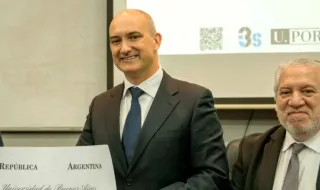
Bruno Sarmento is Doctor Honoris Causa by the University of Buenos Aires

Bruno Sarmento, researcher at the Institute of Research and Innovation in Health (i3S) at the University of Porto, has been awarded the title of Doctor Honoris Causa by the Faculty of Pharmacy and Biochemistry at the University of Buenos Aires, one of the most prestigious higher education institutions in Latin America. The distinction recognizes his outstanding scientific and academic career.

SAPO Notícias07/09/26, 13:08