POMOS Awareness Month
Science

POMOS Awareness Month

dnoticias.pt5 September 2026 at 19:30

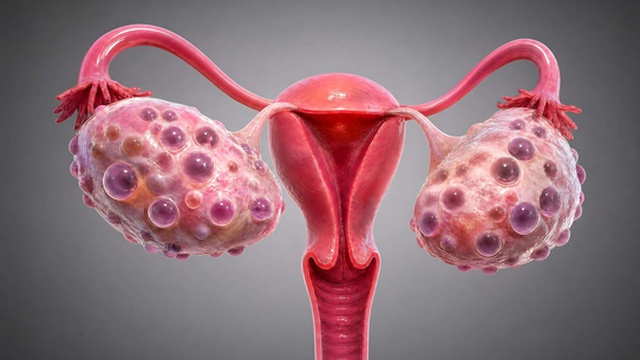
Recently, Polycystic Ovary Syndrome (PCOS) is now called Polyendocrine Metabolic Ovarian Syndrome (POMOS). This new designation aims to better reflect the complexity of this condition that affects between 10% and 15% of women of reproductive age.

September is the month dedicated to POMOS awareness, when the goal is to raise awareness about the importance of understanding this syndrome properly.

Awareness is considered especially important in an era when misinformation about the topic proliferates, making it essential to provide correct information to affected women.

POMOS continues to be one of the main causes of female health problems, underscoring the need for greater research and medical attention to this condition.


Related articles

Science

Portuguese medalists at the Ibero-American Biology Olympiad

Four Portuguese students won medals at the 19th Ibero-American Biology Olympiad: Afonso Veiga, from Colégio Marista de Carcavelos, and Caetana Marques, from Escola Secundária Rainha Dona Leonor in Lisbon, received silver medals; Camila Catarino, from Escola Secundária Lima de Faria in Cantanhede, obtained bronze; and Diana Reis, from Escola Secundária Madeira Torres in Torres Vedras, was awarded a merit diploma. The Order of Biologists congratulated the results, which reflect "talent, dedication and scientific capacity", also highlighting the work of schools, teachers, families and institutions. Portugal had previously achieved positive results at the 37th International Biology Olympiad, held in July in Lithuania.

Jornal Económico05/09/26, 19:50
Science

London Restricted the Most Polluting Cars. Now Children's Lungs Are Healthier

An unprecedented study demonstrated that the clean air zones implemented in London resulted in significant improvements in children's lung health, marking the first time concrete evidence has been presented that these urban policies can benefit child development. The research analyzed the impact of restrictions on the most polluting vehicles on the respiratory health of young people, concluding that the measures implemented in various cities around the world can have lasting positive effects on the child population.

CNN Portugal05/09/26, 18:55
Um rim de porco deu nove meses sem diálise (e salvou o paciente)
Science

A pig kidney gave nine months without dialysis (and saved the patient)

A genetically modified pig kidney transplant kept a patient with kidney failure without dialysis for nine months, a record for this type of procedure. The kidney came from Wilma, a Yucatan mini-pig, and served as a temporary solution while the patient waited for a compatible human kidney. The case was documented in an article published in the journal The Lancet and suggests that genetically modified pig kidneys could one day function as a viable alternative to reduce long waiting lists for organs.

ZAP Notícias05/09/26, 18:30
Science

The North African Neighbor and its Climate Moods…

The article analyses the desertification affecting North Africa and spreading southward, particularly to the Portuguese Algarve, explaining how climate patterns have changed drastically. The author describes in detail the Milankovitch Cycles — axial precession, eccentricity, and axial tilt — as the main scientific causes behind the transformation of the ancient "Green Sahara" (between 11,000 and 5,000 years ago) into the current desert. The article also explores how these climate changes triggered human migrations from North Africa to Mesopotamia, the Nile Valley, and the Iberian Peninsula, with ancient DNA studies confirming African genetic affinities in Iberian samples from the Neolithic/Bronze Age.

Jornal do Algarve05/09/26, 18:06