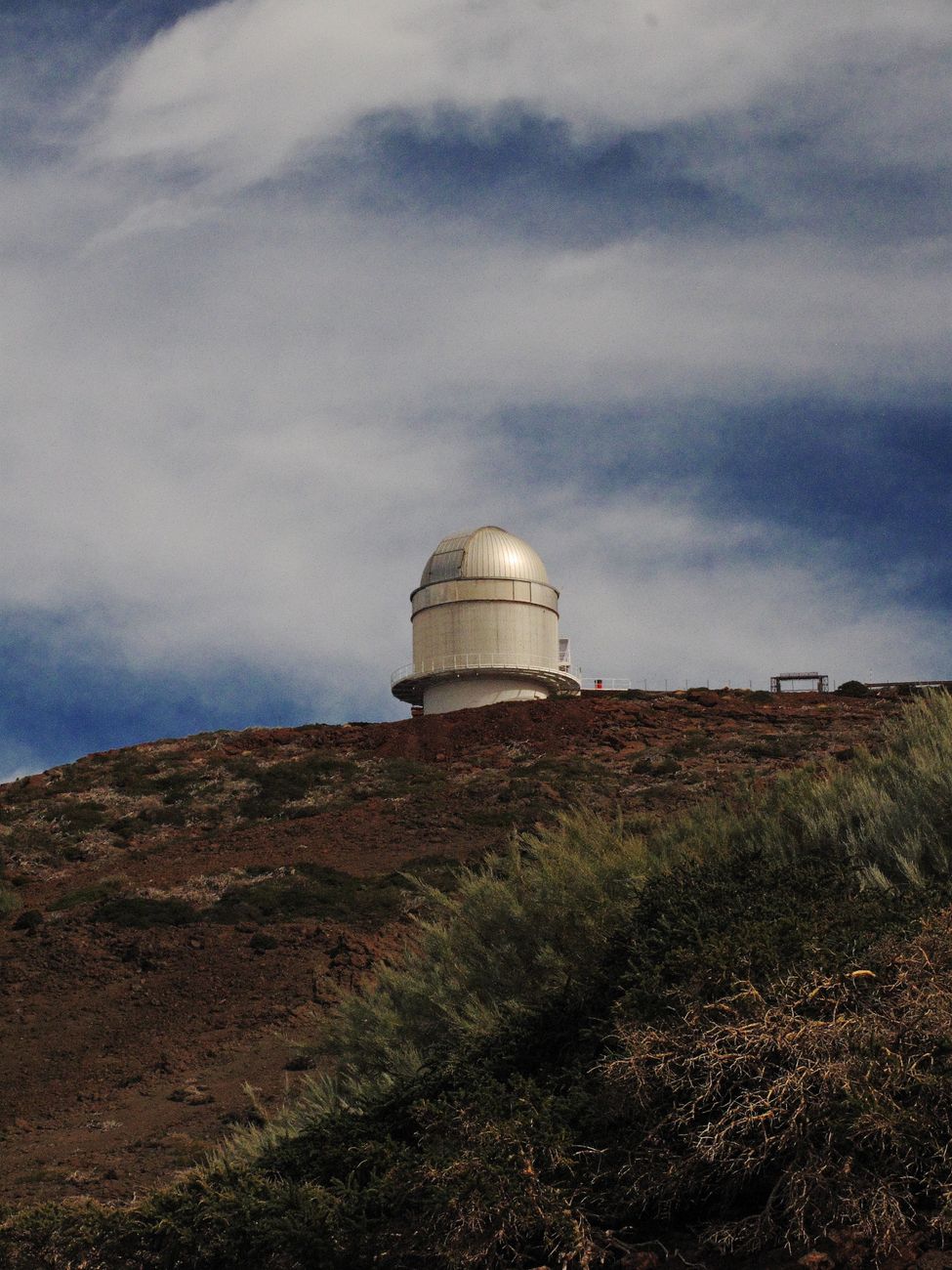
Telescope "with Portuguese hands" in Chile records observationPhoto by Francesco Ungaro on Pexels
Science

Telescope "with Portuguese hands" in Chile records observation

Observador3 September 2026 at 09:40

A telescope with Portuguese participation, located in Chile, managed to record an important observation through its spectrograph. This spectrograph is described as "decisive for understanding how galaxies formed and evolved".

The instrument in question is MOONS, a next-generation spectrograph installed on the Very Large Telescope (VLT) at the European Southern Observatory (ESO), in Chile. The telescope is operated by ESO with strong Portuguese contribution through the Institute of Astrophysics and Space Sciences.

The principal investigator of the MOONS project expressed the expectation of "understanding what led to the peak of galaxy activity". This observation represents a significant step for the study of galactic evolution.

The Portuguese participation in this project includes not only research, but also contributions to the technological development of the instrument, reinforcing Portugal's role in international astronomy.

Related articles

Science

Are the holidays over? 7 tips to return to work without losing your mind

Returning to work after vacation can generate anxiety, irritability, sadness, and difficulty concentrating. This article presents seven tips to facilitate the transition back to professional routine, including gradual task organization, maintaining a consistent sleep routine, setting realistic goals, and practicing physical activity. The text also suggests stress management techniques and the importance of maintaining open communication with colleagues and superiors during this adaptation period.

Notícias de Coimbra03/09/26, 11:06
Science

UC researchers successfully test therapeutic strategy for Machado-Joseph disease

A team from the Center for Neuroscience and Cell Biology at the University of Coimbra successfully tested a new therapeutic strategy for Machado-Joseph disease, using extracellular vesicles as a delivery vehicle for the CRISPR-Cas9 system to neurons. This approach enabled the inactivation of the mutant ATXN3 gene, responsible for the disease that primarily affects the Azores and the central region of the country. The researchers also developed a light-controlled release system that increases the efficiency of genetic editing, minimizing unwanted edits. The methodology demonstrates significant advantages over conventional viral vectors, including lower immune response and greater encapsulation capacity, bringing scientists closer to a potential safer gene therapy for this hereditary neurodegenerative disease.

Jornal Económico03/09/26, 10:36
Science

RESEARCHER ALERTS FOR EXPANSION OF INVASIVE ALGAE ON THE COAST OF SINES (W/AUDIO)

A researcher has alerted to the expansion of an invasive algae that is occupying extensive areas of the seabed on the Sines coast and accumulating on several beaches in the municipality. The phenomenon represents an environmental concern, given the impact this type of organism can have on coastal ecosystems and local marine biodiversity.

Rádio Miróbriga | Santiago do Cacém | A Rádio entre a Planície e o mar03/09/26, 10:35
Portugueses estão por detrás do novo instrumento que vai explorar milhões de estrelas e galáxias
Science

Portuguese Behind New Instrument That Will Explore Millions of Stars and Galaxies

After 16 years of development, a new spectrograph was installed in Chile and began observing the Universe, with Portuguese scientific participation. The equipment will be able to analyze millions of stars and galaxies over the next decade, representing an important milestone for astronomy.

SIC Notícias03/09/26, 10:29