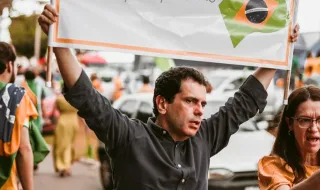
The Local Political Commission of Chega in Famalicão promotes on September 4th, at 8:30 PM, an information session at the Auditorium of the Parish Union of Famalicão/Calendário. The event marks the political comeback of the local structure and aims to present the work developed during the term, discuss municipal problems with the population, and give an informal account of activities. According to Pedro Alves, councilor and local leader, the intention is to promote a more humble format, based on proximity, avoiding the usual dinners that mark the start of the political year.
Pedro Alves advocates that Chega in Famalicão has exercised a "positive opposition," rejecting a confrontational stance. The councilor acknowledges that it is difficult to make proposals when one is not the municipal government, but considers the balance positive and states that citizens' problems have been resolved calmly. The local leader also highlighted that when he took on the local leadership, party members were seen as "bogeymen," a stigma he guarantees has been overcome through contact with associations and parishes.
The session will also serve to reflect on the party's growth, which went from 30 to 432 members (about 85 to 87% active) in the last four years. Pedro Alves, recently re-elected as vice-president of the district political commission of Braga, guaranteed that the work is already reflected on the ground and that the electoral results would be better currently. To accompany this growth, the party will swear in, in about a month, a new organic structure, including the local board with João Pedro Castro as president, study cabinets, and parish nuclei.
The reinforcement of the bases points to a medium-term goal: Pedro Alves does not hide the ambition to be president of the Town Hall of Vila Nova de Famalicão in 2029. The councilor stated that "it is a long and arduous path" and that the party will continue focused on presenting solutions for the municipality. Until then, the priorities are to continue fighting for housing, security, and new infrastructure, as well as demanding greater support for parish presidents, presenting the population a governmental alternative with "rejuvenated and innovative ideas."