
Goodbye baggage? Airport employee reveals what you should never do to identify your suitcases (they may even end up 'grounded')Photo by Dhemer Gonçalves on Pexels
WorldFaro

Goodbye baggage? Airport employee reveals what you should never do to identify your suitcases (they may even end up 'grounded')

Postal do Algarve1 September 2026 at 19:20

A Dublin Airport employee, identified only as John, warned passengers about a very common mistake: putting bows, ribbons or other accessories on suitcase handles to make them easier to identify. According to the worker, cited by the Spanish portal 20minutos, these accessories can interfere with the automatic scanners used to process checked baggage.

When the automatic system cannot correctly read the baggage, the suitcase is sent for manual verification, which significantly increases the time needed before it goes onto the plane. In extreme cases, if the flight is close to departure, the baggage may not be loaded in time and end up at the departure airport while the passenger heads to the destination.

The employee also recommends removing all old tags and stickers from previous trips before checking in the suitcase again, as these elements can make it difficult to read current tags and create confusion in the routing systems that send baggage to the correct destination.

The risk of delays becomes particularly relevant during peak travel periods at airports, such as holiday seasons and public holidays, when baggage handling systems deal with thousands of suitcases in a short time. The recommendation is to keep luggage externally simple, choose suitcases with distinctive colors or features that don't interfere with the equipment, and carefully confirm your baggage when it appears on the collection belt.

Related articles

Rússia ajuda Irão a desenvolver mísseis de cruzeiro supersónicos avançados
World

Russia helps Iran develop advanced supersonic cruise missiles

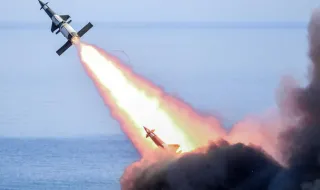
Russia has secretly helped Iran develop advanced supersonic cruise missiles, in one of the most significant known transfers of strategic military technology from Moscow to Tehran. According to an investigation by the Financial Times, the secret program, initiated in 2023 with the code name C430L, involved some of Russia's most experienced missile experts to help Iran develop a new class of weapons.

dnoticias.pt02/09/26, 05:06
Programa cheque-livro ultrapassa 52 mil vouchers e mais de 85% foram usados
World

Book voucher program exceeds 52 thousand vouchers and over 85% were used

The second edition of the book voucher program in Portugal issued 52,448 vouchers of 30 euros for the purchase of books, of which 45,075 were used, representing a usage rate of 85.9%. The program, which ended on Monday, was aimed at 207,086 young residents in Portugal, according to data released by the Ministry of Culture, Youth and Sports.

dnoticias.pt02/09/26, 05:02
World

"Progress paradox": how to turn the renewable boom into an actual drop in emissions

A recent UN report details the risks associated with exceeding the 1.5°C limit of global warming and explores the so-called "progress paradox" — the idea that the growth of renewable energy, although positive, can paradoxically lead to a net increase in emissions if not accompanied by adequate structural policies. The document explains that, for the renewable boom to translate into a real reduction in carbon emissions, systemic changes are needed in how energy is produced, distributed and consumed, including investments in electricity grids, energy storage and energy efficiency.

Euronews Portugal02/09/26, 05:01
World

UN recognizes for the first time that it is inevitable to miss the Paris Agreement target

The UN recognized for the first time that it is inevitable to miss the target of limiting global warming to 1.5 degrees above pre-industrial levels, as established by the Paris Agreement. According to a report by the Intergovernmental Panel on Climate Change, the best possible scenario is warming of 1.8 degrees. However, the document emphasized that it is still possible to reverse this trajectory and make the temperature recede by the end of the century, through aggressive reductions in carbon emissions.

Público02/09/26, 05:01