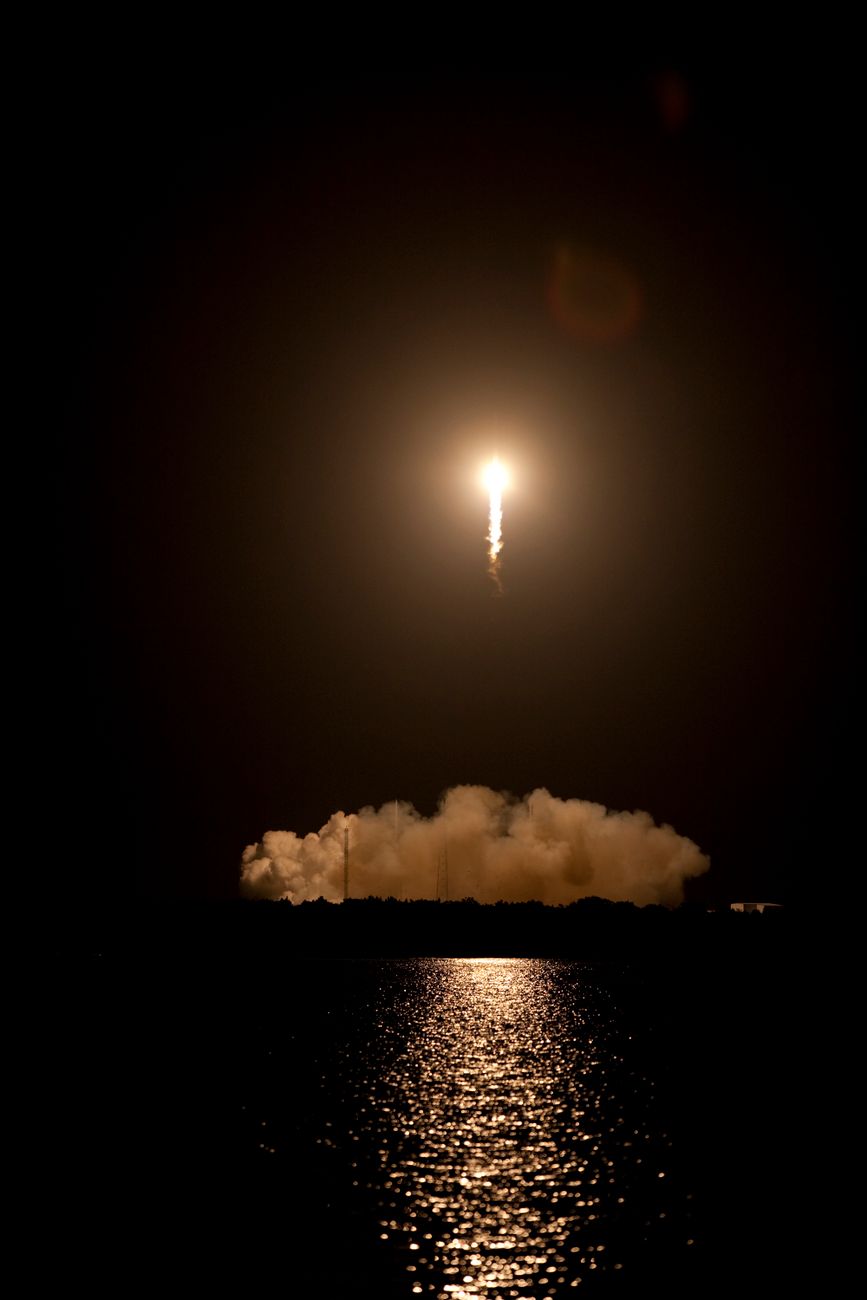
NASA launched this Sunday its newest space observation instrument, the Nancy Grace Roman telescope, from Launch Complex 39A at the Kennedy Space Center in Florida, using a SpaceX Falcon Heavy rocket. The launch occurred at 7:26 a.m. Eastern Time, marking the beginning of a mission that promises to revolutionize how scientists study the universe.
The telescope, the size of a bus and costing $4.3 billion, has a field of view more than 100 times greater than that of the Hubble Space Telescope, which has been in orbit for 36 years. Its infrared camera is a thousand times faster than Hubble's, and according to NASA, one month of observations of the Milky Way by Roman would take a century to complete with the older telescope.
Formerly known as WFIRST, Roman will conduct complete galaxy surveys to study the effects of dark matter and search for exoplanets orbiting other stars outside the solar system. The instrument carries a coronagraph capable of blocking starlight to capture direct images of very faint planets around them. Scientists expect to find thousands of supernovas, tens of thousands of planets, billions of galaxies, and tens of billions of stars.
The telescope will take more than three months to reach the second Sun-Earth Lagrange point, about 1 million miles from Earth, where the James Webb is also located. The primary mission is planned to last five years, with the possibility of extension for another five. The instrument is a tribute to Nancy Grace Roman, a pioneer of modern space astronomy, the first woman to hold an executive position at NASA, and known as the mother of the Hubble telescope, who died in 2018 at age 93.