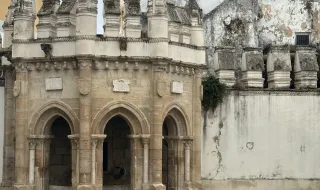
The author Ana Alexandra Resende set off on a journey through Portugal intending to maintain a diet, but ended up giving in to gastronomic temptations in each region she visited. She started in Tomar, where she found a "magnificent pork loin" that made her capitulate, followed by Belmonte with a blood sausage that moved her to tears, and then Vila Viçosa with its sausages. From then on, she abandoned any pretense of food control and began to look at the History of Portugal differently.
The author presents a humorous theory about what she considers to be Portugal's true secret weapon over the centuries. She imagines invading armies who, upon arriving in Portuguese territory, were received with bread, cheese, homemade sausages, olive oil and insistent hospitality at the table. She questions how it would be possible to maintain a military strategy when half the troops would be discussing the quality of the cheese and the other half waiting for dessert.
Each region of Portugal is described as a gastronomic trap: the North with its tripe dishes, smoked sausages, cured meats and goat; the Beiras with Serra cheese and lamb; the Centro region with suckling pig and oven dishes; Ribatejo and Alentejo with bread soups, stews and crumb dishes; the Algarve with cataplana, octopus and clams; Madeira with espetada and bolo do caco; and the Azores with stew and cheeses. The author concludes that perhaps Portugal was not conquered not for lack of attempts, but because no one could resist the invitation to sit down and taste.
The author reflects that Portuguese food represents territory, memory and family, being a form of hospitality that passes from generation to generation. She mentions that, even far from home, a Portuguese person can be eating wonderfully and still miss a simple grilled fish with salad. She concludes that the investigation continues and that there is still much of Portugal to explore, confessing she already misses her grilled fish and her mountain salad.