Porous rocks can store enough energy to power cities
Science
Образование
Энергетика
Lisboa

Porous rocks can store enough energy to power cities

ZAP Notícias30 August 2026 at 16:30

Porous rocks at depth can store enough energy to power small cities, constituting an alternative to dependence on fossil fuels like gas. A study demonstrated, theoretically, that this solution is viable for providing energy to smaller communities.

The work was published this month in the journal Geoenergy and was developed by researchers from the GeoBioTec center at the Faculty of Sciences and Technology of Nova University of Lisbon and from the Dom Luiz Institute at the Faculty of Sciences of the University of Lisbon.

The study analyzes, for the first time and systematically, the potential of deep porous rocks for energy storage, paving the way for new applications in the energy transition.


Related articles

Qual é o país mais seguro para sobreviver a uma catástrofe global? Cientistas respondem
Science

What is the safest country to survive a global catastrophe? Scientists answer

Scientists have identified the characteristics that make some countries more prepared to survive a global catastrophe, including wealth, democratic institutions, distance from conflict zones, strong industrial and agricultural capacity, and in some cases, geographic isolation. The analysis indicates that nations that combine these factors would be better positioned to face catastrophic scenarios.

SAPO Notícias30/08/26, 19:00
Science

Why doing various types of exercise may be the key to a longer life

A study suggests that practicing various types of exercises throughout the week may be more beneficial for health than focusing on just one physical activity. Research indicates that the variety of activities offers greater benefits for longevity and overall health.

BBC News Brasil30/08/26, 17:36
NASA lança maior telescópio espacial para explorar universo
Science

NASA launches largest space telescope to explore universe

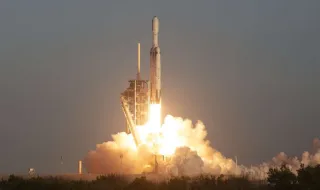
NASA launched the Nancy Grace Roman space telescope, the largest panoramic observatory ever built, aboard a SpaceX Falcon Heavy rocket from the Kennedy Space Center in Florida. The launch occurred at 07:26 (US Eastern time) and the Roman mission includes exploring the universe, searching for answers about dark energy, exoplanets, and infrared astrophysics.

dnoticias.pt30/08/26, 17:23
Science

The Portuguese who simulated 100 days of isolated space mission

Portuguese engineer Diogo Paupério Abreu was selected by the European Space Agency (ESA) to participate in a 100-day isolated space mission simulation, conducted in a 130-square-meter room. Abreu shared his experience with Observador, describing the psychological and physical effects of prolonged isolation, which contribute to ESA's studies on the impacts of long-duration space missions.

Observador30/08/26, 17:18