What is the safest country to survive a global catastrophe? Scientists answer
Science

What is the safest country to survive a global catastrophe? Scientists answer

SAPO Notícias30 August 2026 at 19:00

Scientists attempted to determine which country would be the safest to survive a global catastrophe. The research analyzed different global crisis scenarios and evaluated which nations would be best positioned to keep their populations alive and organized in the face of catastrophic events on a planetary scale.

The study identified that the most prepared countries share a set of specific characteristics. Among the determining factors are economic wealth, which allows for investments in infrastructure and emergency resources, and the presence of stable democratic institutions, which facilitate social coordination during moments of crisis.

Additionally, distance from conflict zones was pointed out as an important element, as was strong industrial and agricultural capacity, which guarantees autonomy in the production of food and essential goods. In some cases, geographic isolation was also considered an advantage, as it can protect certain countries from direct external threats.

The researchers' conclusion indicates that there is no single country that combines all the ideal qualities, but rather a group of nations that combine several of these elements, offering better survival prospects in a global catastrophe scenario.

Related articles

Science

Why doing various types of exercise may be the key to a longer life

A study suggests that practicing various types of exercises throughout the week may be more beneficial for health than focusing on just one physical activity. Research indicates that the variety of activities offers greater benefits for longevity and overall health.

BBC News Brasil30/08/26, 17:36
NASA lança maior telescópio espacial para explorar universo
Science

NASA launches largest space telescope to explore universe

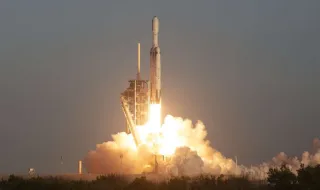
NASA launched the Nancy Grace Roman space telescope, the largest panoramic observatory ever built, aboard a SpaceX Falcon Heavy rocket from the Kennedy Space Center in Florida. The launch occurred at 07:26 (US Eastern time) and the Roman mission includes exploring the universe, searching for answers about dark energy, exoplanets, and infrared astrophysics.

dnoticias.pt30/08/26, 17:23
Science

The Portuguese who simulated 100 days of isolated space mission

Portuguese engineer Diogo Paupério Abreu was selected by the European Space Agency (ESA) to participate in a 100-day isolated space mission simulation, conducted in a 130-square-meter room. Abreu shared his experience with Observador, describing the psychological and physical effects of prolonged isolation, which contribute to ESA's studies on the impacts of long-duration space missions.

Observador30/08/26, 17:18
Science

Catarina is the only Portuguese scientist on an Arctic scientific expedition

Portuguese researcher Catarina V. Guerreiro is participating in a scientific expedition in the Arctic dedicated to the study of the carbon cycle and climate changes in the region. This scientist is the only Portuguese on the expedition, which brings together international specialists to analyze the impact of global warming on sea ice and polar ecosystems. Catarina's work includes the collection of water and sediment samples, fundamental for understanding how the Arctic is responding to climate changes. The expedition takes place aboard a research vessel equipped with modern laboratories, allowing detailed analyses on site. This participation highlights the contribution of Portuguese science to global polar research.

Notícias de Coimbra30/08/26, 17:16