All news
Politics
Business
Technology
Incidents
Sports
Weather
Science
Entertainment
World
Real Estate
AI News
Living in deprived areas linked to worse brain healthPhoto by Mitrey on Pexels
Science

Living in deprived areas linked to worse brain health

Euronews Portugal15 September 2026 at 15:00

Living in disadvantaged neighborhoods may be associated with worse brain health, according to research presented in a study. Researchers analyzed residents of areas with different levels of socioeconomic deprivation and compared brain health indicators between these groups.

The results revealed that residents of the most deprived areas had a higher brain age, meaning their brain appeared to be more aged than their chronological age. Additionally, a smaller total brain volume was identified in these residents, an indicator of brain tissue loss.

Researchers also detected more signs of vascular lesions in the brains of residents of the most disadvantaged areas. These vascular lesions are often associated with blood circulation problems in the brain and can contribute to cognitive decline and other neurological complications. The study thus suggests a possible link between the socioeconomic conditions of the place of residence and long-term brain health.
Why this matters

This research reveals that where we live can directly affect our brain health, meaning that the socioeconomic conditions of communities have measurable consequences for public health. The results suggest that policies to improve disadvantaged areas could contribute to better brain health outcomes in the population.

About this summary

This is our short summary of a report published by Euronews Portugal on 15 September 2026 at 15:00; the full text stays with the publisher. In our feed it sits under Science. We currently carry 4701 items in that section.

All items in this section →
Source

Related articles

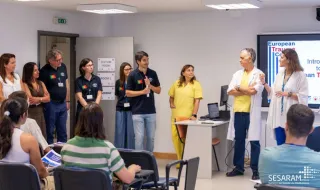
SESARAM recebeu nova edição do 'European Trauma Course'
Science

SESARAM received new edition of 'European Trauma Course'

The Health Service of the Autonomous Region of Madeira (SESARAM) hosted, between 10 and 12 September, the fifth edition of the European Trauma Course, a training aimed at updating doctors' knowledge in the initial care of severely polytraumatized patients. Promoted by the European Trauma Course Organisation and resulting from a partnership between SESARAM and the Lusitanian Association of Trauma and Surgical Emergency (ALTEC), the course was co-funded by the European Union.

dnoticias.pt15/09/26, 15:59
Desde 2025 que está a aumentar transmissão do vírus mpox em Portugal
Science

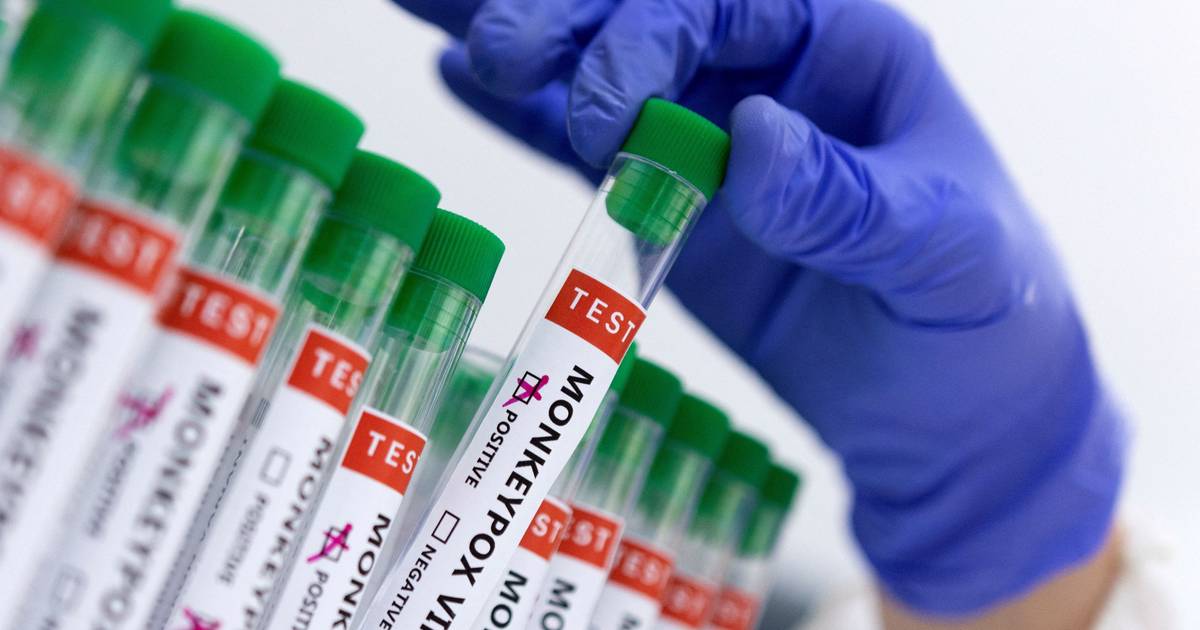
Mpox virus transmission has been increasing in Portugal since 2025

Mpox virus transmission has been increasing in Portugal since 2025, according to data from the Directorate-General for Health. The overwhelming majority of confirmed cases (97.9%) refers to men, with an average age of 35 years. The Lisbon and Tagus Valley region is the most affected, concentrating 66.7% of total infections in the country.

SIC Notícias15/09/26, 15:58
Science

ESEUC launches postgraduate programme in Dialysis Nursing to address chronic kidney disease

ESEUC launches a postgraduate programme in Dialysis Nursing to meet the growing need for specialized care in chronic kidney disease. The in-person course, with 20 places available, begins in February 2027 and aims to develop skills in advanced care for people with chronic kidney disease.

Diário de Coimbra15/09/26, 15:52
Science

Mpox in Portugal: 282 cases and new variant already circulating

Portugal has recorded since 2025 a significant increase in mpox virus transmission, totaling 282 confirmed cases, with a new variant already circulating in the country, according to health authorities.

Notícias de Coimbra15/09/26, 15:33