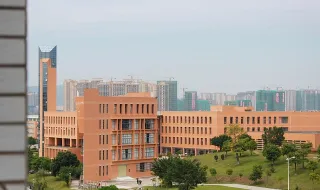
The director of the National Service for Higher Education Pastoral Care (SNPES), Father Miguel Gonçalves Ferreira, considered that the indicators for the start of the academic year are good, despite the initial turbulence. In an interview with the ECCLESIA Agency, the Jesuit priest stated that the rules for access to Higher Education were well received and had good results, although differences continue to be observed between the coast and the interior of the country.
Father Miguel Gonçalves Ferreira highlighted that the presence of universities is very relevant for inland cities, giving them a significant contribution in economic and social terms. He warned, however, that some support rules are designed from Lisbon, without taking into account the distances and circumstances specific to the interior, such as the example of someone who studies in Évora and lives in Portel, about 40 kilometers away.
The SNPES director also highlighted the great challenge of foreign students, mostly from the African Countries of Official Portuguese Language (PALOP), who in many universities reach almost 20 percent or exceed this percentage. He emphasized that some of these students were already born in Portugal and that this reality allows the subsistence of certain universities in the interior, such as the one in Coimbra, which is unthinkable today without this presence.
Regarding academic hazing rituals, Father Miguel Gonçalves Ferreira stated that it is an ancient integration ritual that he did not want to have a totally negative view of, but that it has been degrading in some environments. He criticized the low level of interactions, the sexist and misogynistic language, and the excesses in academic celebrations, advocating that dialogue be promoted to find good ways to preserve something that is positive.