All news
Politics
Business
Technology
Incidents
Sports
Weather
Science
Entertainment
World
Real Estate
AI News
EU prepares new rules for social media: minors will only be able to have their own accounts after age 15
Technology

EU prepares new rules for social media: minors will only be able to have their own accounts after age 15

SAPO14 September 2026 at 14:26

The European Union is preparing new rules for social media that will establish that minors will only be able to have their own accounts starting at age 15. The measure is part of new European legislation called EU KIDS Act, which will be presented this Thursday.

The legislation's main objective is the protection of children in the digital world, establishing stricter limits for minors' access to social media platforms. This is another EU initiative to regulate the digital environment and protect vulnerable groups.

The new rules represent a significant shift from current policies of many social media platforms, which generally allow children as young as 13 to create profiles on the platforms. The proposal reflects growing concerns about the effects of social media on the mental health and development of children and adolescents.

Why this matters

European youth will be directly affected by these new rules, which will restrict access to social media for minors under 15. The legislation follows a growing trend of regulating digital platforms to protect minors in the online environment.

About this summary

This is our short summary of a report published by SAPO on 14 September 2026 at 14:26; the full text stays with the publisher. In our feed it sits under Technology. We currently carry 4417 items in that section.

All items in this section →
Source

Related articles

Technology

NASA and IBM Join Forces to Create AI That Learns to "Read" the Moon's Surface to Prepare for Future Missions

NASA and IBM announced a partnership to develop an artificial intelligence tool capable of analyzing millions of images and lunar maps, transforming decades of data collected about the Moon into useful information to identify safe landing sites, search for ice, and study the evolution of the lunar surface for future space missions.

SAPO Tek14/09/26, 15:42
Technology

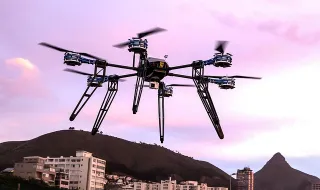
Uavision invests up to five million euros in Viseu to create innovative aeronautical system

Uavision, a company based in Torres Vedras, will invest up to five million euros over three years in Viseu to develop HAPS (High Altitude Pseudo Satellite), a high-altitude unmanned aeronautical system. The total project is around 10 million euros and includes the construction of a hangar at Aeródromo Gonçalves Lobato, partnerships with Instituto Piaget for training, and the initial creation of 10 to 20 jobs. The choice of Viseu is due to the quality of the runway which will allow testing the systems developed locally.

Jornal do Centro14/09/26, 15:30
Technology

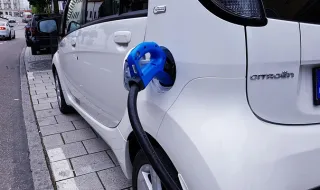
Smart charging of electric vehicles can save Europe €10 billion in grid infrastructure, European study finds

A European study released this week concludes that Europe can save around €10 billion in electricity grid investment by 2030 through smart management of electric vehicle charging. The "Electricity Grids in Europe" report, commissioned by EIT Urban Mobility, ChargeUp Europe and ACEA and conducted by Siemens, modeled 64 European cities and concluded that €24.7 billion would be needed to accommodate projected EV growth, but with smart charging this could drop to around €14 billion. The study projects that 100% electric vehicles will represent up to 27.3% of the fleet in Sweden, 15.7% in Germany and 4.5% in Spain by 2030, and warns that low-voltage networks need the most physical reinforcement, with 77.7% of required investment destined for this level. Among the cities analyzed, Berlin, Amsterdam and Munich lead investment needs, with values between €900 million and €1.15 billion each.

Jornal Económico14/09/26, 15:13
Technology

Japan approves magnetic bed that treats serious diseases?

An article verifies the truthfulness of a viral Facebook post claiming that Japan would have approved the installation of magnetic medical beds in hospitals for the treatment of serious diseases. The verification indicates that this information about the medical technology has been circulating online for several years, without concrete evidence that it has actually been implemented or approved by Japanese authorities.

Observador14/09/26, 15:09