All news
Politics
Business
Technology
Incidents
Sports
Weather
Science
Entertainment
World
Real Estate
AI News
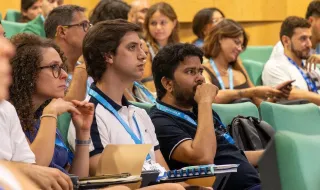
Ecoanxiety: When Concern for the Planet and Climate Change Become Chronic StressPhoto by RobinHiggins on Pexels
Science
Investments
Space

Ecoanxiety: When Concern for the Planet and Climate Change Become Chronic Stress

oglobo14 September 2026 at 14:00

Concern about the future of the planet can stop being an occasional fear and start persistently interfering with daily life. The fear of another storm, the feeling of lack of control in the face of extreme events, or the anguish caused by environmental changes can affect mental health. When this suffering becomes frequent and begins to compromise daily routine, specialists associate this condition with ecoanxiety.

Ecoanxiety is a term used to describe the emotional impacts related to the climate crisis and its consequences. However, it is not a clinical diagnosis or a specific disorder recognized by the Diagnostic and Statistical Manual of Mental Disorders (DSM), the main reference for the classification of psychiatric conditions.

Although it is not officially classified as a disorder, ecoanxiety can cause significant distress and symptoms such as anguish, sadness, irritability, sleep disturbances, difficulty concentrating, and anxiety or panic attacks. The term has gained ground in recent years as the effects of climate change become more visible and frequent.

Why this matters

This article is relevant because it addresses a growing psychological phenomenon linked to increasing awareness about climate change, alerting readers to recognize symptoms that may be affecting themselves or people around them. Understanding ecoanxiety can help reduce stigma and encourage people to seek appropriate mental health support when needed.

About this summary

This is our short summary of a report published by oglobo on 14 September 2026 at 14:00; the full text stays with the publisher. In our feed it sits under Science. We currently carry 4575 items in that section.

All items in this section →
Source

Related articles

Science

Scientists say there won't be cities on the Moon anytime soon

Scientists warn that, despite recent advances in mapping the lunar surface to assess the viability of building cities on the Moon, a new study significantly slows down expectations for permanent colonization of Earth's natural satellite.

Euronews Portugal14/09/26, 15:16
Macaronight 2026 leva a ciência da Universidade da Madeira ao Largo do Colégio
Science

Macaronight 2026 brings University of Madeira science to Largo do Colégio

The University of Madeira promotes, on September 25th, between 3:00 PM and 9:30 PM, at Largo do Colégio, in Funchal, Macaronight 2026 – European Researchers' Night. The event, free and open to the public, aims to bring science and research closer to society, providing direct contact with the work developed by professors, researchers and students from UMa, with presentations from different scientific areas throughout the afternoon and evening.

dnoticias.pt14/09/26, 14:54
Science

What effect do colors have on our brain?

Colors do not physically exist in light — it only contains wavelengths, and it is the nervous system that constructs the experience of color by processing signals from the retina. Science confirms that there is a neuroscience of color, with research demonstrating how different shades affect emotions, concentration, and human behavior. The human retina has five types of photoreceptors (four types of cones and rods) that work together to create our chromatic perception, and although associations such as red with danger or green with tranquility are widespread, the neurological response to colors is more complex and individual than many imagine.

extra14/09/26, 14:38
Conferência Blue Think 2026 revelou doutorandos do CIIMAR e CCMAR
Science

Blue Think 2026 Conference revealed PhD students from CIIMAR and CCMAR

The 7th edition of the Blue Think Conference (BTC) brought together early-career researchers in marine and environmental sciences, revealing numerous PhD students from CIIMAR and CCMAR. Traditionally held at CIIMAR in Matosinhos, the conference will now alternate between CIIMAR and CCMAR, following the ongoing collaboration between these two marine research institutions.

SAPO14/09/26, 14:28