All news
Politics
Business
Technology
Incidents
Sports
Weather
Science
Entertainment
World
Real Estate
AI News
2,000-year-old murals may have used human blood to withstand monsoons
Science

2,000-year-old murals may have used human blood to withstand monsoons

ZAP Notícias13 September 2026 at 11:00

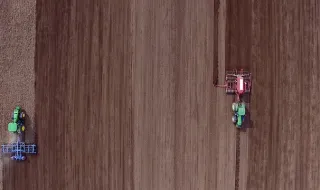
Researchers discovered that the vivid red murals in the Zuojiang River valley, China, created around 2,000 years ago, may have withstood successive monsoons through the use of human blood. Chemical analyses identified human proteins in a binding agent beneath the red pigment of Huashan, which would have helped fuse the pigment to the rock.

The authors of the new study suggest that this use of human blood may be linked to childbirth or fertility rituals, although they acknowledge this is a hypothesis and not a confirmed fact.

For decades, researchers have wondered how this rock art managed to remain practically intact for so long, exposed to the region's harsh climatic conditions.

The discovery represents an important clue for understanding the techniques used in creating this ancient art and the possible cultural practices or rituals associated with the paintings.

Why this matters

This discovery is of interest to readers in China and the Zuojiang River valley region because it reveals new information about preservation techniques used millennia ago, potentially linking the rock art to cultural practices or ancestral rituals. Although this is academic research, it may have implications for understanding local cultural history and future heritage conservation studies.

About this summary

This is our short summary of a report published by ZAP Notícias on 13 September 2026 at 11:00; the full text stays with the publisher. In our feed it sits under Science. We currently carry 4500 items in that section.

All items in this section →
Source

Related articles

Science

Innovative surgery in Santa Maria. Patients with pulmonary hypertension no longer need to go abroad.

Santa Maria Hospital in Lisbon now performs surgeries for patients with chronic thromboembolic pulmonary hypertension, a serious form of the disease previously only treated in the United Kingdom. This innovation allows Portuguese patients and their families to no longer be obligated to travel abroad to receive treatment.

RTP Notícias13/09/26, 13:50
Science

New doctors from UC "ready" to add value to society

For the first time, the University of Coimbra held an event exclusively dedicated to the investiture of new doctors, a symbolic and festive moment that allowed not only to celebrate the academic achievements of the new doctors, but also to underline the importance of research for society. The new doctors were highlighted as prepared to add value to the community through their scientific work.

Diário de Coimbra13/09/26, 12:15
Cozinhar já era uma forma de arte na Idade do Bronze, revela estudo
Science

Cooking was already an art form in the Bronze Age, study reveals

A study conducted by Danish researchers revealed that cuisine in Syria 4,500 years ago, during the Bronze Age, was already surprisingly sophisticated. Recipes based on goat, cereals or gazelle were cooked slowly in clay pots, demonstrating advanced culinary techniques for the time.

SAPO Notícias13/09/26, 11:59
Nova Guiné: a ilha com a mais diversificada flora no mundo
Science

New Guinea: the island with the most diverse flora in the world

A study published in the journal Nature revealed that New Guinea harbors more than 14,000 plant species, of which 68% are endemic, making it the island with the most diverse flora in the world.

SAPO Notícias13/09/26, 11:55