All news
Politics
Business
Technology
Incidents
Sports
Weather
Science
Entertainment
World
Real Estate
AI News
Aveiro Receives New Meeting of European V2G Project - QUESTSPhoto by Berho on Pexels
TechnologyAveiro

Aveiro Receives New Meeting of European V2G Project - QUESTS

Diário de Aveiro13 September 2026 at 10:40

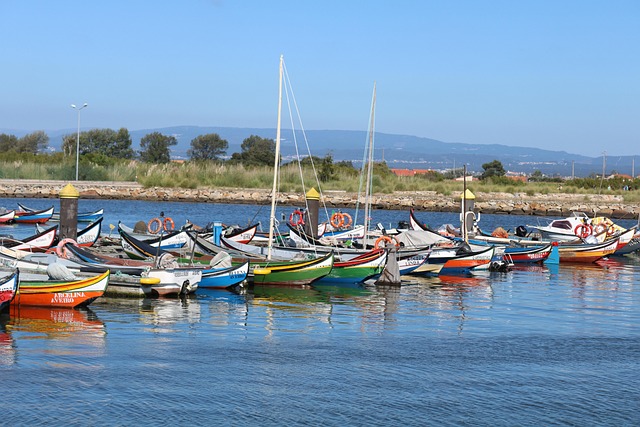
The European V2G - QUESTS project holds a new meeting in Aveiro, Portugal. This project focuses on Vehicle-to-Grid technology, which enables bidirectional communication between electric vehicles and the electrical grid.

The project involves three distinct European case studies: one in Portugal, another in the Netherlands and a third in Estonia. This geographical diversity allows researchers to analyze quite different territorial and social realities.

The choice of three countries with distinct characteristics enables a comprehensive comparison on how V2G technology can be implemented in different European contexts, both in terms of infrastructure and social acceptance.
Why this matters

This meeting in Aveiro is relevant for readers in the region because it positions Portugal as one of the European pilot hubs in V2G research, a technology that can transform how electric vehicle owners interact with the energy grid. Portuguese participation in a transnational project offers the local community perspectives on access to innovations in energy storage and possibly reduced costs. The article does not specify concrete benefits for readers nor implementation dates.

About this summary

This is our short summary of a report published by Diário de Aveiro on 13 September 2026 at 10:40; the full text stays with the publisher. In our feed it sits under Technology, and it concerns Aveiro. We currently carry 4283 items in that section.

All items in this section →
Source

Related articles

Kits solares ou como usar a varanda para baixar a conta da luz
Technology

Solar kits or how to use the balcony to lower the electricity bill

The article discusses the possibility of installing solar self-consumption stations on balconies or terraces through low-cost solar kits, allowing anyone, even without advanced technical knowledge, to produce their own electrical energy using only basic tools like a screwdriver, thus reducing the electricity bill.

Jornal de Negócios13/09/26, 14:00
Technology

AI Leaders Admit to Slowing Down More Advanced Models

Leaders of the largest artificial intelligence companies admit the need to slow down the development of the most advanced models given the growing security risks. Dario Amodei, CEO of Anthropic, proposed external evaluations with access similar to that of internal teams, a measure supported by Sam Altman and Elon Musk, clarifying that the proposal does not imply suspending model training, but creating time to test and protect the technology. Demis Hassabis, from Google DeepMind, considered the guidance correct, although he argues that the details still need to be defined. Any eventual coordination faces competitive and geopolitical obstacles, given that American companies compete for customers and market share among themselves and with Chinese groups, and it remains uncertain whether competition authorities would accept a coordinated slowdown.

Eco13/09/26, 13:39
Technology

Clucky is an app for people who need to "rise with the chickens" and has challenges to get them out of bed

The Clucky app was created for people who have difficulty waking up in the morning, offering an alternative to traditional alarm clocks that are often turned off and lead to going back to sleep. The app works through challenges and missions that the user needs to complete before being able to silence the morning alarm, thus encouraging a more active and conscious wake-up routine.

SAPO Tek13/09/26, 13:10
Como é que o Wi-Fi atravessa paredes? E porque é que algumas paredes o destroem?
Technology

How Does Wi-Fi Go Through Walls? And Why Do Some Walls Destroy It?

Wi-Fi doesn't go through walls without consequences: the signal loses energy, is absorbed, reflected and deflected by the materials it encounters. Materials like concrete, brick, metal and even water absorb or block most of the signal, while plaster, wood and glass let it pass with less loss. The signal frequency also influences things: higher frequencies (like 5 GHz) offer more speed but attenuate more quickly through obstacles, while lower frequencies (2.4 GHz) penetrate better but with less bandwidth.

SAPO Notícias13/09/26, 13:00