Spanish researchers discover a crucial link in the Atlantic for predicting El Niño phenomenaPhoto by tomwieden on Pexels
Science
Образование
Климат
Инвестиции
Leiria

Spanish researchers discover a crucial link in the Atlantic for predicting El Niño phenomena

Meteored Portugal9 September 2026 at 17:01

A team of researchers from the TROPA group, belonging to the Complutense University of Madrid and the Institute of Geosciences (IGEO-CSIC), discovered that the Atlantic Ocean may play a decisive role in predicting the El Niño phenomenon, one of the main drivers of global climate variability.

El Niño is characterized by the anomalous warming of the tropical Pacific waters, which triggers atmospheric changes that propagate far beyond that region, influencing the climate in various parts of the world, including the Iberian Peninsula.

According to the research, although the correlation effect in the Iberian countries is quite reduced, it is normally associated with rising temperatures on a global scale.

The discovery suggests that, to anticipate one of the planet's largest climate phenomena, it may be necessary to direct attention to the Atlantic Ocean, opening new possibilities for prediction and preparation for different sectors of society on a global scale.
Related articles

Estudo quer conhecer hábitos de consumo de pescado e a percepção sobre aquacultura na Madeira
Science

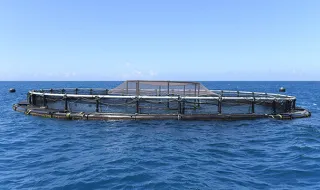
Study aims to understand fish consumption habits and perception of aquaculture in Madeira

The Aquafish0.0 project, which has ARDITI - Regional Agency for the Development of Research, Technology and Innovation as a partner, is conducting a study in the Autonomous Region of Madeira to understand the local population's fish consumption habits, as well as their knowledge and perceptions about aquaculture and the valorization of fish by-products.

SAPO Notícias09/09/26, 17:37
Alga invasora está a espalhar-se na costa de Sines e preocupa investigadores
Science

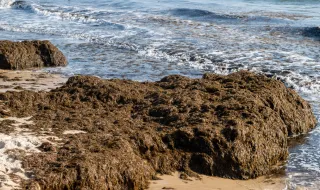
Invasive alga is spreading along the coast of Sines and is worrying researchers

The invasive alga Rugulopteryx okamurae, originating from Asian waters and unknown to Portuguese marine ecosystems, is rapidly expanding along the coast of Sines, in the district of Setúbal. Researchers are closely monitoring the spread of this species, which represents a potential threat to local marine biodiversity and to the coastal ecosystems of the region.

RFM09/09/26, 17:20
Perdeu um dedo e recusou 150 mil dólares. Médico dedicou 37 anos a estudar e proteger cobras
Science

Lost a finger and refused 150 thousand dollars. Doctor dedicated 37 years to studying and protecting snakes

Chen Yuanhui, known as the "snake doctor" at 77 years old, dedicated 37 years of his life to the study and protection of the Mangshan viper, a rare species he discovered. Despite being bitten nine times and losing a finger due to snake venom, Yuanhui refused an offer of 150 thousand dollars and continues at the forefront of research. Originally from Guangdong, in southern China, he graduated from a medical college in Hunan at 19 years old and worked at a research center dedicated to snake bites, which was closed in 1982, choosing to continue his work independently.

ZAP Notícias09/09/26, 17:10
Science

Free screenings mark World Migraine Day in Coimbra

Free screenings take place in Coimbra to mark World Migraine Day, an initiative by MiGRA Portugal and the Portuguese Headache Society, with the aim of alerting the population to the importance of diagnosis and appropriate treatment of this disabling neurological condition.

Diário de Coimbra09/09/26, 17:00