Code in DNA is 'proof that life had an intelligent creator', says scientistPhoto by juniorsilveirapirata on Pexels
Science
Инвестиции
Lisboa

Code in DNA is 'proof that life had an intelligent creator', says scientist

extra8 September 2026 at 11:14

A British scientist in organic medicinal chemistry and medicine stated that the complex code embedded in human DNA is "convincing proof that life had an intelligent creator." Orson Wedgwood, a health researcher based in New Zealand, declared that DNA could not have arisen randomly in pools or hydrothermal vents on primitive Earth, classifying its spontaneous formation as so unlikely that it is, in practice, impossible.

Wedgwood believes the genetic system contains abstract instructions for whose creation nature has no known mechanism capable of acting without external aid. "It is a language, and that provides evidence of intelligence," he told the Daily Mail.

The scientist's theory goes beyond the DNA question. He also pointed to the protective barriers that hold cells together, arguing that explaining their emergence reveals a fundamental gap in explanations about how life began.

Wedgwood's argument is based on the irreducible complexity of biological systems, suggesting that both the genetic code and cellular structures are too elaborate to have arisen by chance or by undirected natural processes.
Related articles

Un nuevo método permite predecir dónde se producirán grandes terremotos
Science

A new method allows predicting where large earthquakes will occur

American researchers have developed a method to identify areas where large earthquakes are most likely to occur, rather than predicting when they will happen. The technique allows determining zones of higher tension accumulation along major geological faults, offering a new tool to improve disaster preparedness in high-risk seismic regions.

El Periódico Mediterráneo - General08/09/26, 12:00
Carrinhos de supermercado são a nova casa de cavalos-marinhos nas águas do Tejo
Science

Shopping carts are the new home for seahorses in the Tagus waters

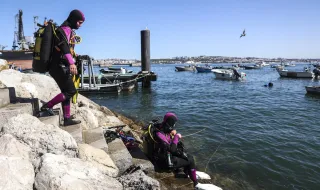
Divers from the MARDIVE association monitored in Trafaria bay, in Almada, nine shopping carts transformed into artificial shelters for seahorses in the Tagus river. The installation, made in three distinct zones with three structures each, is part of the D-Evolution initiative, promoted by WWF Portugal for ecological restoration and recovery of degraded marine ecosystems.

ZAP Notícias08/09/26, 12:00
Science

Working in Extreme Heat: DGS Warns of Risks in Construction Sites, Kitchens and Warehouses

The Directorate-General for Health warned about the risks of working in extreme heat, which can reduce concentration, increase the probability of accidents and contribute to heat-related injuries and illnesses. The alert is especially relevant for workers who operate in the sun, in kitchens, warehouses or poorly ventilated spaces during days of high temperature.

CNN Portugal08/09/26, 12:00
Science

Smoking women with 40% higher risk of infertility than non-smokers

A study review revealed that smoking women face a 40% higher risk of infertility compared to non-smokers. The research also showed that women who quit smoking have a 25% lower risk of infertility compared to those who continue to consume tobacco, highlighting the benefits of smoking cessation for female reproductive health.

Público08/09/26, 11:54