How Rossby waves connect the atmosphere to the oceans and bring food to phytoplanktonPhoto by crissequeira89 on Pexels
Science
Транспорт
Leiria

How Rossby waves connect the atmosphere to the oceans and bring food to phytoplankton

Meteored Portugal8 September 2026 at 06:01

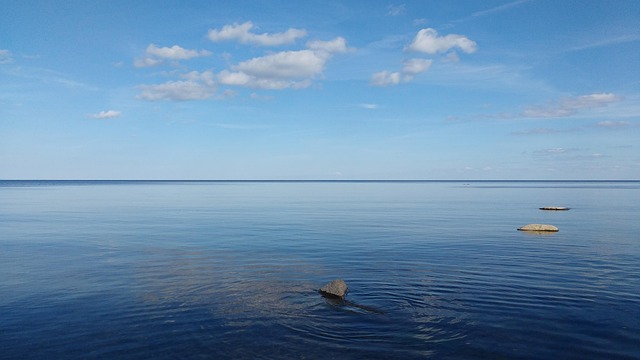
Rossby waves are gigantic, slow, and practically invisible, propagating through the oceans and functioning as a connection between the atmosphere and the oceans. As they move, these waves can transport nutrients to phytoplankton or make it sink beyond its reach. When phytoplankton finds enough light and nutrients, it can multiply to the point of transforming the color of the ocean.

There is a paradox in surface waters: there is abundance of light necessary for photosynthesis, but most of phytoplankton's food remains tens or hundreds of meters below. Nitrates, phosphates, and other nutrients tend to accumulate in deep waters, far from the sunlit zone.

In the vertical structure of the ocean, two important layers are distinguished: the thermocline, where temperature decreases rapidly, and the nutricline, where nutrient concentration begins to increase with depth. These layers create a physical barrier between available light and necessary nutrients.

Unlike fish, phytoplankton is composed of microorganisms that cannot travel long distances in search of food, making the action of Rossby waves fundamental to bringing nutrients to them or to taking them to regions where they can feed.
Related articles

“Isto não pode estar certo”. Os rios do Ártico estão a violar as regras da erosão
Science

"This can't be right". The Arctic rivers are breaking the rules of erosion

Canadian scientists from Simon Fraser University and the University of British Columbia discovered that rivers in the High Arctic are violating the traditional rules of fluvial erosion. The researchers assumed that permanently frozen soil (permafrost) acts as a "glue" that prevents erosion, keeping sediments in place. However, the collected data shows the opposite: with rising temperatures and the "awakening" of the Arctic, more fluvial systems are emerging and the erosive processes are behaving in unexpected ways, challenging established scientific models.

ZAP Notícias08/09/26, 07:20
Novos medicamentos para a obesidade associados à redução das crises de asma
Science

New obesity drugs associated with reduction in asthma attacks

Researchers have discovered that new obesity medications, such as GLP-1 agonists, may be associated with a reduction in asthma attacks, suggesting significant additional respiratory benefits. Researcher Chloe Bloom considers the results encouraging, but warns that they should not, on their own, alter therapeutic decisions, and should be considered as preliminary evidence requiring further investigation.

SIC Notícias08/09/26, 07:13
Science

Morteza Mahmoudi: "I was a victim of academic <em>bullying</em>. But this didn't end my career"

Morteza Mahmoudi, director of the Academic Parity Movement, an organization that combats academic harassment, reveals he was a victim of academic "bullying", but guarantees that this didn't end his career. In the interview, he warns that this conduct goes beyond simple interpersonal conflict and can seriously harm careers, families and the health of victims.

Público08/09/26, 07:10
Science

Smoke from others killed 1.66 million people in 2023

A recent study revealed that approximately 1.66 million people died in 2023 due to exposure to secondhand smoke, with approximately 2.71 billion people worldwide exposed to secondhand tobacco smoke, including 767 million children. The World Health Organization warned of the need to implement stricter measures to protect against secondhand smoke, especially in enclosed spaces and public places.

Notícias de Coimbra08/09/26, 07:02