ADHD in adults: forgetting appointments and never finishing tasks may be more than just distractionPhoto by Oliver Matos on Pexels
ScienceFaro

ADHD in adults: forgetting appointments and never finishing tasks may be more than just distraction

SOL4 September 2026 at 16:34

Procrastinating, missing deadlines and starting tasks that never get finished are behaviors that can both be common everyday traits and signs of a frequently underdiagnosed disorder in adults. Attention Deficit Hyperactivity Disorder (ADHD) continues to be underdiagnosed in many adults who carry for decades the feeling of not being organized or responsible enough.

These symptoms go beyond simple distraction. Forgetting appointments, having difficulty completing projects and constantly struggling with time management may represent real neurological challenges that affect the professional and personal lives of those suffering from this condition.

Understanding the difference between common personality traits and ADHD symptoms can represent a significant change in how these individuals evaluate themselves. During years of self-criticism, many adults do not realize they are fighting a neurodevelopmental disorder and not simply against a lack of discipline or willpower.

The article suggests that recognizing these signs and seeking professional evaluation can help thousands of people finally understand their difficulties and obtain the necessary support to manage the condition effectively.


Related articles

Science

The North African Neighbor and its Climate Moods…

The article analyses the desertification affecting North Africa and spreading southward, particularly to the Portuguese Algarve, explaining how climate patterns have changed drastically. The author describes in detail the Milankovitch Cycles — axial precession, eccentricity, and axial tilt — as the main scientific causes behind the transformation of the ancient "Green Sahara" (between 11,000 and 5,000 years ago) into the current desert. The article also explores how these climate changes triggered human migrations from North Africa to Mesopotamia, the Nile Valley, and the Iberian Peninsula, with ancient DNA studies confirming African genetic affinities in Iberian samples from the Neolithic/Bronze Age.

Jornal do Algarve05/09/26, 18:06
Science

Three daily habits that accelerate aging (and how to prevent them from your 20s onwards)

Experts warn that three daily habits — inflammatory and irregular eating, prolonged exposure to environmental toxins like pesticides and PFAS, and chronic stress combined with social isolation — are accelerating cellular aging. Functional medicine doctors recommend that prevention begin in your 20s, through measures such as daily physical activity, sun protection, strength training, sleep hygiene, bone health reinforcement with calcium and vitamin D, and avoiding heating food in plastic to prevent the release of endocrine disruptors.

oRegiões05/09/26, 18:04
Um porto do tempo de Jesus reaparece no Mar da Galileia. E há uma hipótese que entusiasma os arqueólogos
Science

A port from Jesus' time reappears in the Sea of Galilee. And there is a hypothesis that excites archaeologists

The low water levels of the Sea of Galilee partially revealed an ancient Roman port associated with Capernaum, which remained partially submerged for almost two millennia. The discovery, which excited archaeologists, now allows the study of a structure dated to the time of Jesus and the early Christians, offering new clues about daily life and commercial activities in the region during the Roman period.

SAPO Notícias05/09/26, 18:00
Lua prepara-se para receber o primeiro “aeroporto” espacial… já há regras de trânsito
Science

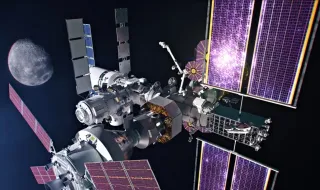
The Moon is preparing to receive its first space "airport"... there are already traffic rules

The Moon is about to receive its first space "airport", with traffic rules already established to manage the growing lunar traffic. With multiple spacecraft, logistical modules and crewed vehicles heading to the Moon, it becomes necessary to regulate space traffic to avoid collisions and conflicts between missions from different countries and companies. The new rules aim to coordinate landings, takeoffs and the occupation of specific areas on the lunar surface, marking a new era in commercial and governmental space exploration.

SAPO Notícias05/09/26, 17:56