Why babies smell so good: discovery won 2026 IgNobel
ScienceSetúbal

Why babies smell so good: discovery won 2026 IgNobel

ZAP Notícias4 September 2026 at 22:30

An international team of researchers received an Ig Nobel Prize for the discovery that babies' body odor activates brain regions associated with pleasure and reward, which may favor care and protection behaviors. Researchers Ilona Croy, Tomasz Frackowiak, Thomas Hummel and Agnieszka Sorokowska studied how children's body odor changes as they grow and how it is perceived by parents. The results suggest that babies smell particularly good, while teenagers seem to lose this so-called "advantage." The Ig Nobel Prize is traditionally awarded to research that "makes people laugh and then think," recognizing scientific discoveries that first provoke amusement and then reflection. The research began with an approach that explored differences in olfactory perception between different age groups.

Related articles

Science

Medieval manuscripts on animal skin reveal ancient history of deadly virus in sheep

Researchers discovered traces of DNA from a deadly virus that affected sheep thousands of years ago, by analyzing medieval manuscripts made with animal skin. Through advanced genetic sequencing techniques, the team managed to identify the presence of ancient pathogens preserved in the pages of these historical documents, revealing an unprecedented window into the study of viral evolution and the diseases that plagued livestock in the Middle Ages.

Euronews Portugal05/09/26, 07:36
Science

How technology is helping archaeology reveal larger and more sophisticated peoples in the Amazon

Recent studies using LiDAR technology have revealed that pre-Columbian civilizations in the Amazon were much more populous and sophisticated than previously thought. A research published in the journal Nature showed that the Aquiry, an ancient civilization in the current state of Acre, may have reached three million inhabitants and built 30 thousand geoglyphs about 2 thousand years ago. Over the past two decades, different studies have revolutionized population estimates for the Amazon, demonstrating that these peoples possessed advanced levels of agriculture and architecture that challenge previous conceptions about the region.

oglobo05/09/26, 07:30
Science

Fertility fatigue: why so many couples give up treatments and how rest can help | By Ana Luísa Alves

The article addresses the fatigue resulting from fertility treatments, an emotional, physical, and psychological exhaustion that affects many couples undergoing assisted reproduction processes. The piece highlights that between 41% and 42% of women in treatment suffer from anxiety and depression, and that the most difficult moments are follicular puncture and waiting for results. It emphasizes the importance of strategic rest as part of treatment, including intentional breaks and reducing work overload, arguing that vacations can help break the cycle of hope and frustration, allowing for clearer and more balanced decisions.

Postal do Algarve05/09/26, 07:30
Será que os buracos negros fingem ter grandes massas?
Science

Are black holes pretending to have large masses?

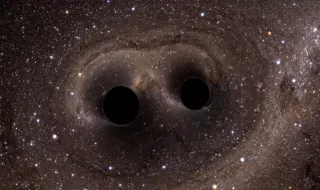
A new analysis of the gravitational wave signal GW231123, captured by the LIGO detectors in November 2023, suggests that gravitational lensing may have made two black holes appear much more massive and faster than they really were. If the hypothesis is correct, the system would have about 140 solar masses, instead of the initially estimated 230. The merger of these black holes continues to intrigue scientists, as with their large masses, their existence cannot be explained by standard knowledge of stellar evolution.

ZAP Notícias05/09/26, 07:20