What is the 'dopamine menu'? Influencer tests strategy after spending up to 13 hours a day on her phonePhoto by Jonathan Córdova R. on Pexels
Technology
Инвестиции
Космос
Coimbra

What is the 'dopamine menu'? Influencer tests strategy after spending up to 13 hours a day on her phone

oglobo3 September 2026 at 11:35

Brazilian influencer Suellen Carey decided to test the so-called "dopamine menu" for seven days after realizing she was connected to her cell phone and computer between 12 and 13 hours a day. The strategy, which has been gaining traction on social media, consists of creating a kind of personal menu of pleasurable activities to turn to when the urge arises to open a social network, check notifications, or continue scrolling through the screen without a defined purpose.

The dopamine menu's proposal is not to eliminate technology from the routine, but rather to replace, at certain moments, the automatic use of devices with experiences that also provide pleasure and stimulation. The principle behind the strategy is to offer alternatives that generate satisfaction without relying exclusively on screens.

Suellen decided to try the method after identifying that her technology usage time was excessive. The issue became more evident to her when she tried to distinguish the time dedicated to screens from other daily activities, revealing how much device usage had become automatic and prolonged.

Related articles

Cidade de Nova Iorque proíbe temporariamente uso de IA por estudantes até ao oitavo ano
Technology

New York City temporarily bans use of AI by students up to eighth grade

New York City implemented a one-year temporary ban on the use of artificial intelligence by students up to eighth grade, affecting approximately 600,000 public school students out of a total of one million.

SAPO Notícias03/09/26, 12:19
Carrinhos inteligentes são o futuro, mas fazem-nos gastar mais dinheiro no supermercado
Technology

Smart carts are the future, but they make us spend more money at the supermarket

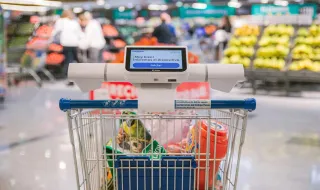
Smart shopping carts equipped with screens and artificial intelligence are becoming a reality in Portugal, although they are not yet widely adopted. A new study revealed that these technological carts, which allow consumers to navigate the store, access promotions and even make automatic payment, have a significant impact on purchasing behavior: consumers tend to spend more money when using these devices. The research indicates that the convenience and personalized experience offered by AI in supermarkets encourage impulse purchases and greater volume of products acquired, raising questions about the balance between technological innovation and consumer spending control.

SAPO Notícias03/09/26, 12:00
DJI renova câmara compacta Osmo 360 com sensores de 1 polegada
Technology

DJI renews compact Osmo 360 camera with 1-inch sensors

DJI presented the new Osmo 360 panoramic camera, equipped with 1-inch sensors, Supernight AI 2.0 mode and new ultra-resistant replaceable lenses. The device is already available at the brand's stores, with the physical debut scheduled for IFA 2026 in Berlin.

SAPO Notícias03/09/26, 12:00
Technology

Sonae Educação Prize brings together over 2,000 registrants to debate Artificial Intelligence and reveals winners on September 10

The Sonae Educação Prize conference will bring together about 2,000 participants on September 10 at the Serralves Foundation in Porto to debate the impact of Artificial Intelligence on education and announce the winners of the 2026 edition. The event, under the theme "Smart Education: the future of learning in the AI era", features Arnold Pears, professor at the KTH Royal Institute of Technology in Sweden, as the main speaker. The 2026 edition recorded a record 1,031 eligible applications, more than double the 437 from the previous year, divided between the General Category and the new Public Schools Category. The prize will distribute 150 thousand euros in grants, bringing the total awarded since 2023 to 550 thousand euros.

Jornal Económico03/09/26, 11:48