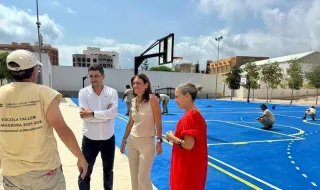
Vila Viçosa hosted on September 2nd a technical meeting dedicated to the valorization of archaeological remains found in a marble quarry in the municipality, where there is evidence of Roman-era exploitation. The meeting took place at Cineteatro Florbela Espanca and was attended by representatives from the Municipality of Vila Viçosa, CCDR Alentejo, the Directorate-General for Energy and Geology (DGEG), CECHAP and the University of Évora. Teresa Rita Pereira, auxiliary researcher at DGEG, stated that the process is still in an initial phase, focused on the inventorying and recognition of the archaeological remains.
The DGEG representative highlighted that the site has high potential from the perspective of cultural landscape and industrial tourism, but warned that any opening to public visitation will have to respect specific safety conditions. "A quarry is an area in which it is necessary to pay attention to everything that surrounds us," she explained, emphasizing that a quarry does not have the same conditions as a traditional archaeological site and that opening to the public cannot happen without all safety and licensing norms and procedures being guaranteed.
According to Teresa Rita Pereira, there are various pieces of evidence of extraction from the Roman period on the site, and scientific work has already been developed on this matter, namely the doctoral thesis of Professor André Carneiro, who also participated in the meeting. The meeting also served to reinforce the historical importance of marble exploitation in Vila Viçosa, which, according to the researcher, has "millennia of existence," conferring on the territory a very relevant economic and cultural dimension.
After the meeting, participants moved to the quarry to observe on site the identified archaeological evidence. DGEG also revealed that integration of this space into the Marble Route developed by CECHAP and into the Itinerary of Mines and Points of Geological and Mining Interest of Portugal is under analysis. However, any decision will depend on dialogue with the owners and those holding exploitation rights, since the quarry may be exploited again. The valorization of the remains will thus have to be compatible with existing rights and the extractive industry's activity.