Political analyst Germano Almeida explained to 'Europa Viva' the main impacts of disinformation in the European UnionPhoto by Moha Kha on Pexels
Politics
Европейский союз
Инвестиции

Political analyst Germano Almeida explained to 'Europa Viva' the main impacts of disinformation in the European Union

Now1 September 2026 at 19:00

Political analyst Germano Almeida was invited by the "Europa Viva" program to analyze and explain the main impacts of disinformation in the context of the European Union. During his intervention, Almeida addressed in detail the strategies and false information campaigns that have been affecting the European bloc.

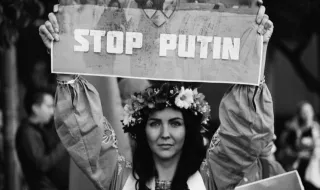
As part of his analysis, the specialist particularly highlighted Russia's role as one of the main actors in the dissemination of disinformation within the European Union. This reference indicates that the analyst considers Russian actions particularly relevant to understanding the informational threats the bloc currently faces.

In addition to Russia, Germano Almeida also drew attention to China's role in disinformation campaigns targeting the European Union. This mention suggests that, from the analyst's perspective, Beijing represents another significant actor in the manipulation of information in the European space.

Almeida's intervention in the "Europa Viva" program comes in the context of growing concern in the European Union regarding threats to informational integrity and the democratic stability of the bloc, highlighting the importance of analyzing and understanding these geopolitical dynamics.


Related articles

Politics

Who decides how a woman should live?

This article addresses the debate between conservatism and feminism in Portugal, questioning where the boundary lies between these two ideological currents when it comes to defining how a woman should live her life. The piece features Catarina Lucas to help better understand this issue, exploring the tensions between these opposing views on the role of women in society and in intimacy.

Observador02/09/26, 06:05
Las tascas de Castelló, en el punto de mira. Escritos a la Fiscalía y al Síndic de Greuges reabren la polémica de la ZAS
Politics

The tascas of Castelló, in the spotlight. Written complaints to the Prosecutor's Office and the Síndic de Greuges reopen the ZAS controversy

The controversy over the declaration of acoustically saturated zone (ZAS) of the tascas of Castelló and its surroundings has returned to the forefront, with the submission of a written complaint to the Provincial Prosecutor's Office of Castellón and the Síndic de Greuges by about twenty neighbors. The residents are asking for "protection" so that the Municipal Council of Castelló does not eliminate the ZAS, fearing that the area will be converted into a space of gastronomic tradition, which could worsen the noise problems in the area.

El Periódico Mediterráneo - General02/09/26, 05:15
Politics

What happens if Putin loses the war?

Journalist Daniela Nunes analyses the possible scenarios for the Russian regime if the war in Ukraine does not go well for Putin. The article raises the question of whether the Russian president may fear for his own political survival, exploring the potential consequences of a defeat or a poor military outcome for his leadership and for power stability in Russia.

Observador02/09/26, 05:03
Politics

For reducing centralism

A bill was presented to the Assembly of the Republic aiming to create a Public Procurement Dispute Resolution Chamber, an independent administrative authority under the Ministry of Justice, dedicated to resolving pre-contractual and contractual disputes in the area of public procurement. This initiative represents a recognition of the need to reduce centralism in the Portuguese judicial system, decentralizing competencies to administrative courts and regional administrative courts.

SAPO Notícias02/09/26, 04:55