Lousada was the first municipality in the country to create and fund a prize dedicated to Health researchPhoto by Paulo Filipë on Pexels
SciencePorto

Lousada was the first municipality in the country to create and fund a prize dedicated to Health research

Jornal 36031 August 2026 at 15:59

Applications for the third edition of the Dr. Mário Fonseca Scientific Research Prize close on August 31, at a time when the Municipality of Lousada aims to establish this initiative as a national reference in Health Sciences research. The mayor of Lousada, Nelson Oliveira, emphasizes that Lousada was the first municipality in the country to create and fund a prize dedicated specifically to research in this area, which represents, according to the mayor, "a responsibility that we take on with pride."

The prize, worth 30 thousand euros, is aimed at junior researchers who completed their doctorate less than ten years ago. Nelson Oliveira explains that it is at this stage that many researchers face the greatest funding difficulties, and that "in every edition we have had young researchers from Lousada" among the applicants. The Municipality therefore intends to support those building their scientific careers and awaken vocations among the young people of the municipality. The initiative has the support of SOMA GROUP, a company from Lousada that contributes 20 thousand euros.

Among the projects already distinguished, the first edition awarded Sandra Tavares, a researcher at i3S, for her work on a new chemotherapy approach for triple negative breast cancer, developed in collaboration with IPO-Porto and the University Medical Center Utrecht. In the second edition, the winner was Andreia Mósca, from GIMM — Gulbenkian Institute of Molecular Medicine, with a project on the impact of viruses on malaria infection. Nelson Oliveira highlights that "the prize does not end at the moment the check is handed over" and that the winning projects have been progressing internationally.

The Dr. Mário Fonseca Prize pays tribute to Dr. Mário Fonseca, known as "the people's doctor," associating his name with scientific research to keep alive the values of service and dedication. The initiative also has Professor Manuel Sobrinho Simões as an ambassador, which, according to Nelson Oliveira, confers "a seal of credibility and scientific rigor." Candidate projects may be developed in national or foreign institutions, allowing bridges to be built between Lousada and international research centers.

Related articles

Science

Foods children should eat before 6pm to sleep better at night, according to nutritionist

Nutritionist Helen Ruckledge, from MattressOnline, recommends that children consume fruits and leafy green vegetables, rich in magnesium, before 6pm to improve sleep quality. The specialist highlights the importance of a balanced diet rich in fiber, vitamins, and proteins for child development and growth, warning that sweets, snacks, ice cream, and other treats consumed in excess during holidays can disrupt children's sleep cycle.

oglobo01/09/26, 20:37
Science

Portugal commemorates the 130 years of the first oceanographic campaign

The 130 years of the first oceanography campaign in Portugal, carried out by King Carlos I, were marked this Tuesday with the start of a new campaign by the research vessel Mário Ruivo, celebrating the Portuguese scientific legacy in the field of oceanography.

Público01/09/26, 19:40
Nace en Italia la decimoquinta cría de la hipopótama más longeva de Europa
Science

The fifteenth calf of Europe's longest-living hippo is born in Italy

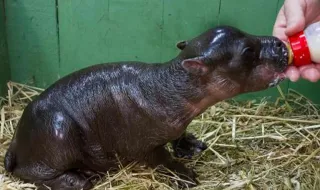
The longest-living common hippo female in Europe, named 'Camilla', gave birth to her fifteenth calf at almost 55 years of age, a record for the species, at the Natura Viva park in Bussolengo, near Verona, in northern Italy. The mother, who weighs 2,500 kilos, and the calf, with 50 kilos, live together with their group and with a nyala antelope herd at the park.

El Periódico Mediterráneo - General01/09/26, 18:51
Science

Discover the German technology that helps NASA find new invisible worlds

NASA's Nancy Grace Roman Space Telescope, launched on August 30, 2026, features essential technology developed in Heidelberg, Germany, which will reveal worlds previously hidden in the universe. The telescope, currently on a three-month journey to the L2 Lagrange point, has two main scientific instruments: an infrared camera to capture vast regions of the sky and a specialized coronagraph to search for hidden planets. The German contribution, from the Max Planck Institute for Astronomy, will be fundamental for the investigations the telescope will carry out from its position 1.6 million kilometers from Earth.

Meteored Portugal01/09/26, 18:09