From "lost strip" to ecological infrastructurePhoto by Rodolfo Gaion on Pexels
Science
Инвестиции
Aveiro

From "lost strip" to ecological infrastructure

NotíciasdeAveiro.pt1 September 2026 at 00:07

Watercourses and riparian vegetation in forest plantations have long been treated as "lost strips": too wet for production and too narrow to be a priority, often ending up dominated by invasive alien species. This article argues that this perspective has changed and that transforming these strips into conservation corridors constitutes "cutting-edge technology" for 21st-century forest management. The author, Bruna Oliveira, a researcher at CESAM at the University of Aveiro, explains that a well-designed conservation corridor increases species diversity, creates moisture and shade gradients that reduce stress during drought periods, and offers refuge, food, and movement routes for wildlife.

These conservation corridors also function as fire prevention tools by introducing lines of higher moisture, less flammable vegetation, and discontinuities in fuel structure. The author argues that the Portuguese forest cannot continue to be a monoculture of risks, and that it is necessary to create mosaics with varied combustibility patterns. The corridors do not remove productivity from the system, but stabilize it and reduce potential losses in extreme events. Research already allows for quantification of installation and maintenance costs, benefits in timber, carbon sequestration, wildfire risk reduction, and hydrological regulation.

In 2024, the European Union approved the Nature Restoration Regulation (Regulation EU 2024/1991), which sets binding targets to restore at least 20% of land and marine areas by 2030 and all degraded ecosystems by 2050. The European Commission is also preparing a nature credits system, complementary to carbon markets, to certify positive outcomes for biodiversity and ecosystem services. In this context, conservation corridors can become strategic assets that generate additional income for landowners and businesses.

The author presents concrete proposals for the pine sector and other forest sectors, including the integration of corridors into management plans, the valorization of invasive biomass as a raw material in circular economy, and the use of remote monitoring with standardized indicators. Bruna Oliveira emphasizes that conservation corridors require collaboration between researchers, landowners, forest associations, industry, protected area managers, and local communities, being simultaneously an ecological object and a social process that can transform forest management into something more diverse, fair, and resilient.
Related articles

Confirmado novo sistema planetário com um mundo potencialmente habitável
Science

Confirmed new planetary system with a potentially habitable world

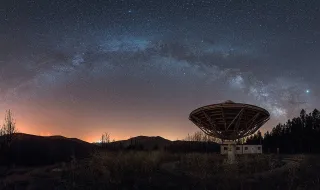
A study led by the Institute of Astrophysics of Andalusia (IAA), in Granada, confirmed the planetary nature of the TOI-1752 system, located approximately 337 light-years from Earth, which includes a potentially habitable world. This discovery represents a significant advance in the search for exoplanets capable of supporting life.

Correio da Manhã01/09/26, 01:06
Escola de Verão do Espaço ‘voa’ este ano até à Pampilhosa da Serra
Science

Space Summer School 'flies' this year to Pampilhosa da Serra

The 12th edition of the Space Summer School, organized by the Pedro Nunes Institute (IPN) in Coimbra, takes place in September for three days and ends in the municipality of Pampilhosa da Serra. Titled "Coimbra Space Summer School", this initiative takes place within the scope of IPN's activities related to the space sector.

SAPO Notícias31/08/26, 22:39
Afinal, os planetas não giram exatamente à volta do Sol
Science

After all, the planets do not orbit exactly around the Sun

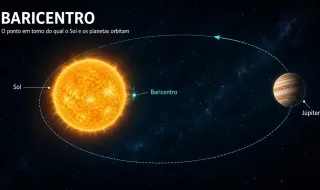
For decades, we've learned that planets orbit the Sun, but this is only a simplification for educational purposes. In reality, both the Sun and the planets orbit around a common point called the barycenter, which is the center of mass of the solar system. This point can be slightly displaced from the center of the Sun due to the gravitational influence of the planets, especially the most massive ones like Jupiter. When the mass of the Sun and the planets is considered together, the Sun also moves slightly, meaning no celestial body is completely stationary in the solar system.

SAPO Notícias31/08/26, 22:30
Como lidar com o regresso ao trabalho após as férias
Science

How to deal with returning to work after vacation

The end of August marks the return to work for many Portuguese people, which can cause the so-called post-vacation syndrome, an adjustment disorder with symptoms such as apathy, tiredness, and lack of motivation. Although it is not considered a disease, this condition affects many workers who face the transition from vacation to work routine. The article offers practical tips for dealing with and avoiding this phenomenon.

dnoticias.pt31/08/26, 22:00