NASA launches largest space telescope to explore the UniversePhoto by john mckenna on Pexels
Science
США
Космос
Lisboa

NASA launches largest space telescope to explore the Universe

NewsAvia30 August 2026 at 16:24

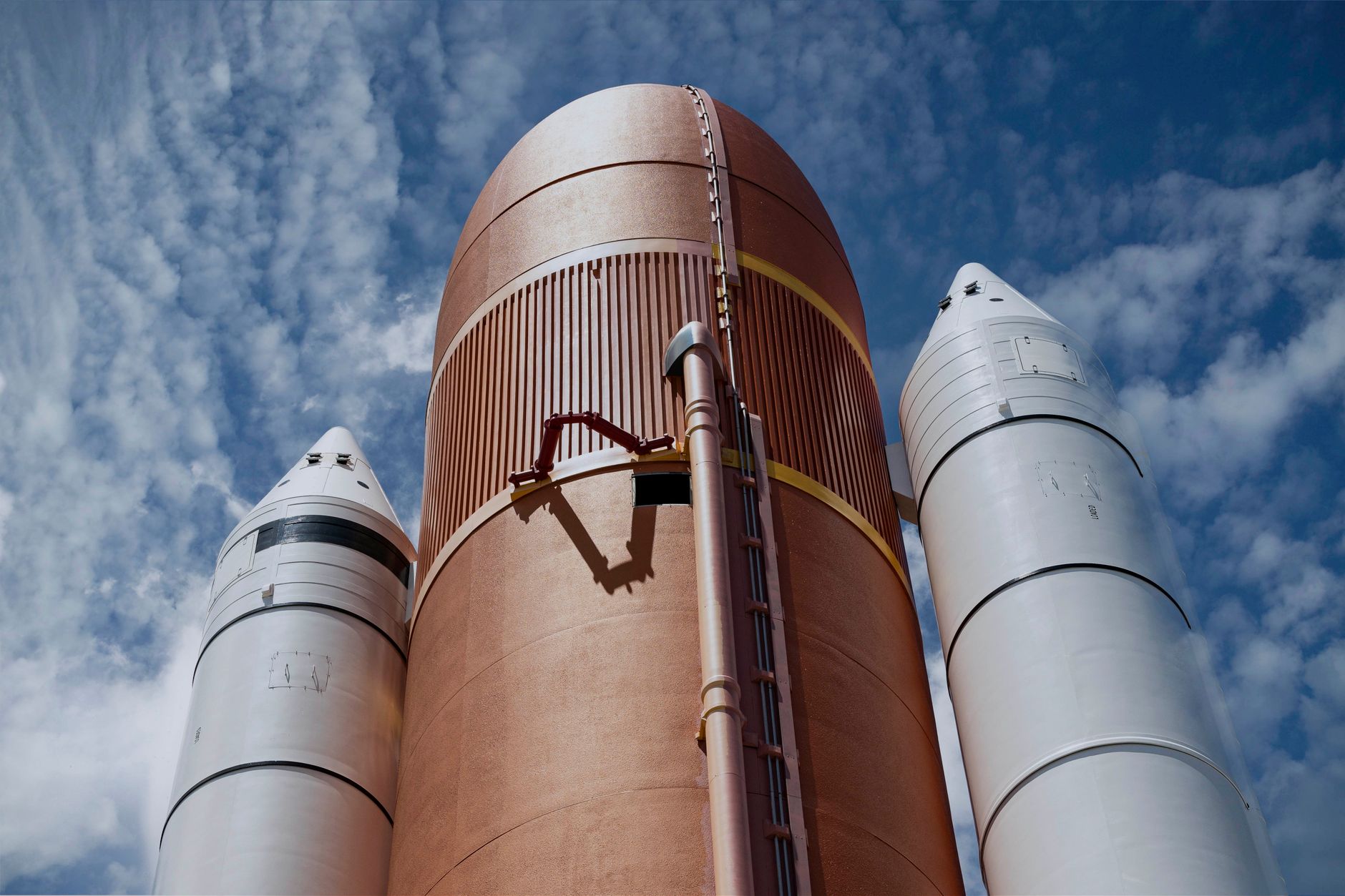
NASA launched on Sunday, August 30th, the "Nancy Grace Roman" telescope, the largest panoramic observatory ever built, aboard a SpaceX Falcon Heavy rocket. The launch took place at 07:26 Eastern Time from the Kennedy Space Center in Florida. The bus-sized telescope has the mission to explore the universe and seek answers about dark energy, exoplanets and infrared astrophysics.

The Roman has a field of view 100 times superior to the Hubble telescope and may challenge the current understanding of the universe. A single month of observations will allow tracking the Milky Way and detecting up to half of its stars, which will generate a catalog larger than any other existing one. NASA predicts that these capabilities may change current models of physics.

The telescope is valued at 4.3 billion dollars, according to the Associated Press. The Roman is heading to an observation point located 1.6 million kilometers away, where the Webb space telescope is already located, and will take more than three months to reach its destination.

The observatory was named in honor of the late Nancy Grace Roman, NASA's first chief astronomer.
Related articles

Confirmado novo sistema planetário com um mundo potencialmente habitável
Science

Confirmed new planetary system with a potentially habitable world

A study led by the Institute of Astrophysics of Andalusia (IAA), in Granada, confirmed the planetary nature of the TOI-1752 system, located approximately 337 light-years from Earth, which includes a potentially habitable world. This discovery represents a significant advance in the search for exoplanets capable of supporting life.

Correio da Manhã01/09/26, 01:06
Science

From "lost strip" to ecological infrastructure

An opinion article by Bruna Oliveira, a researcher at the University of Aveiro, advocates for transforming neglected riparian strips in forest plantations into ecological conservation corridors. The text explains how this "ecological infrastructure" can increase biodiversity, reduce fire risk, protect water resources, and generate measurable economic benefits. The author references the EU's 2024 Nature Restoration Regulation and future nature credits as opportunities for forest owners, and presents practical examples in coastal pine forests. She concludes that collaboration between researchers, owners, industry, and local communities is essential to implement these solutions in a technically robust and economically viable manner.

NotíciasdeAveiro.pt01/09/26, 00:07
Escola de Verão do Espaço ‘voa’ este ano até à Pampilhosa da Serra
Science

Space Summer School 'flies' this year to Pampilhosa da Serra

The 12th edition of the Space Summer School, organized by the Pedro Nunes Institute (IPN) in Coimbra, takes place in September for three days and ends in the municipality of Pampilhosa da Serra. Titled "Coimbra Space Summer School", this initiative takes place within the scope of IPN's activities related to the space sector.

SAPO Notícias31/08/26, 22:39
Afinal, os planetas não giram exatamente à volta do Sol
Science

After all, the planets do not orbit exactly around the Sun

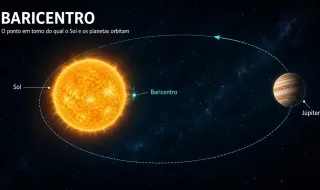
For decades, we've learned that planets orbit the Sun, but this is only a simplification for educational purposes. In reality, both the Sun and the planets orbit around a common point called the barycenter, which is the center of mass of the solar system. This point can be slightly displaced from the center of the Sun due to the gravitational influence of the planets, especially the most massive ones like Jupiter. When the mass of the Sun and the planets is considered together, the Sun also moves slightly, meaning no celestial body is completely stationary in the solar system.

SAPO Notícias31/08/26, 22:30