Ukraine: "Your pain touches us," said D. Rui Valério to the Ukrainian community, in Lisbon
Agência ECCLESIA30 August 2026 at 17:59
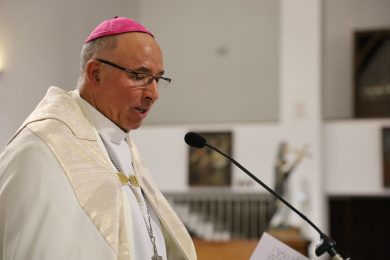
The Patriarch of Lisbon, D. Rui Valério, participated in a Prayer Vigil at the Jerónimos Monastery, in Lisbon, on the occasion of the 35th anniversary of the restoration of Ukraine's independence. The event was promoted by the Chaplaincy of the Ukrainian Greek-Catholic Church in Portugal and the Embassy of Ukraine in Portugal.
In the homily, D. Rui Valério stated that celebrating the 35 years of Ukraine's independence means celebrating the history of a people and questioning what future one wants to offer to the next generations. The patriarch asked that Ukraine may live in peace, security, freedom and dignity.
D. Rui Valério said that praying for peace is placing oneself at the service of human dignity, remembering that war destroys buildings, schools, hospitals and cities, but also causes a deeper destruction that happens in the human being. He underscored that each person possesses a dignity that no political circumstance, no border and no conflict can erase.
The patriarch expressed solidarity with the Ukrainian people, referring to those who remain in the country, those who had to leave, the families welcomed by Portugal, those who care for the wounded, those who lost someone and those who continue to wait for peace.
Vigília de oração em no Mosteiro dos Jerónimos, por ocasião dos 35 anos da restauração da independência, pediu «paz, segurança, liberdade e dignidade» para o país
Foto Agência ECCLESIA/PR, Arquivo
Lisboa, 30 ago 2026 (Ecclesia) – O patriarca de Lisboa afirmou hoje que celebrar os 35 anos da restauração da independência da Ucrânia significa celebrar a história de um povo e questionar sobre o futuro a “oferecer às gerações seguintes” que precisa de paz e dignidade.
“Os 35 anos da restauração da independência da Ucrânia, vividos num contexto tão doloroso, são também um apelo à responsabilidade e à esperança. Hoje pedimos que a Ucrânia possa viver em paz, segurança, liberdade e dignidade”, afirmou D. Rui Valério na homilia da Vigília de Oração que decorreu no Mosteiro dos Jerónimos, em Lisboa.
Promovida pela Capelania da Igreja Greco-Católica Ucraniana em Portugal e pela Embaixada da Ucrânia em Portugal, a Vigília de Oração realiza-se no contexto do 35.º aniversário da restauração da Independência da Ucrânia, um momento de pedir a paz para o país.
“O aniversário da independência de uma nação possui também uma dimensão moral. Celebrar a história de um povo não é apenas recordar o que aconteceu; é perguntar o que queremos construir com a liberdade recebida e que futuro queremos oferecer às gerações seguintes”, referiu o patriarca de Lisboa
D. Rui Valério afirmou que rezar pela paz é também colocar-se “ao serviço da dignidade humana”, lembrando que “a guerra destrói edifícios, escolas, hospitais e cidades” e provoca também uma “destruição mais profunda”, que “acontece sempre no ser humano”.
“A guerra fere corpos, separa famílias, cria órfãos e viúvas, obriga pessoas a abandonar a sua casa, transforma projetos em incerteza e introduz o medo no quotidiano. E corre um risco terrível: fazer com que a pessoa deixe de ser vista como pessoa”.
O patriarca de Lisboa disse que “um morto nunca é apenas um número” e“um ferido nunca é apenas uma estatística”, uma criança aterrorizada nunca é apenas uma consequência inevitável”.
“Cada homem, cada mulher, cada criança possui um rosto, um nome, uma história. Cada pessoa possui uma dignidade que nenhuma circunstância política, nenhuma fronteira e nenhum conflito podem apagar”, sublinhou.
“A voz da Igreja deve elevar-se sempre que a dignidade humana é espezinhada. Não para acrescentar mais uma voz ao conflito, nem para aumentar divisões, mas para recordar aquilo que nenhuma guerra pode tornar relativo: a dignidade de cada ser humano é inviolável”.
O patriarca de Lisboa referiu também que a presença na Vigília de Oração é uma manifestação da “solidariedade mais profunda do que qualquer diferença de língua, nacionalidade, cultura ou história”, porque “quando um ser humano é ferido, algo da humanidade inteira é ferido”, “quando uma mãe chora um filho, essa dor pertence, de algum modo, a todos nós” e “quando uma criança cresce entre sirenes e explosões, toda a humanidade tem razões para se interrogar”.
“Esta noite não rezamos por pessoas abstratas ou distantes. Estamos unidos ao povo ucraniano: aos que permanecem no seu país; aos que tiveram de partir; às famílias que Portugal acolheu; aos que cuidam dos feridos; aos que perderam alguém; aos que continuam a esperar; aos que trabalham pela paz. E a todos aqueles que, em qualquer lugar, carregam no corpo ou na alma as consequências da guerra”, disse D. Rui Valério na homilia da Vigília de Oração
The Venezuelan president Nicolás Maduro published photographs taken in the prison where he claims to be "resisting", according to images dated June 25, a day after a double earthquake in Venezuela. The post comes in a context of political crisis and contestation of the electoral results that give victory to Maduro, at a time of great tension in the country.
At least 137 thousand people have disappeared due to the armed conflict in Colombia since 1921, according to alarming data released this Sunday, the International Day of Victims of Enforced Disappearances. The date marks the struggle of families seeking their missing loved ones and draws attention to one of the greatest humanitarian tragedies in the history of the South American country.
Ricardo Monteiro, commentator at CNN Portugal, analyzes the sociological similarities between Iceland's vote rejecting the European Union and Brexit, highlighting that, despite these parallels in voting patterns, Iceland is already practically integrated into the European Union.
Russia announced on Sunday, August 30, that it is preparing "massive attacks" against Ukraine's energy sector infrastructures, in response to Kiev's continued attacks on civilian facilities and the Russian oil complex. During last winter, Moscow had already devastated Ukraine's energy sector, leaving millions of people without electricity and heating. Ceasefire negotiations remain stalled since the United States became involved in the war against Iran, in February, with contacts between Russians and Ukrainians limited to the exchange of war prisoners and soldiers' bodies.