Missed the partial lunar eclipse? See here
ScienceLisboa

Missed the partial lunar eclipse? See here

Sábado28 August 2026 at 11:57

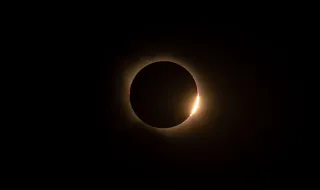
The partial lunar eclipse was observed in the early morning of this Friday in different parts of the world. The astronomical phenomenon was visible to spectators in various regions of the planet.

In Lisbon, the eclipse began around 5:13 AM. During the phenomenon, the Moon was 96.3% covered by Earth's shadow, which meant an almost total coverage of the lunar disk.


Related articles

Science

Sines Port among strategic points for the entry of non-indigenous marine species in Portugal

A scientific study led by MARE and ARNET identified Sines Port as one of the strategic zones for the entry of non-indigenous marine species in Portugal, accounting for 231 confirmed species in national waters, an increase of about 75% compared to the 133 identified a decade ago. The research, published in Marine Pollution Bulletin and involving 31 researchers from 11 universities, points to navigation as the main pathway of introduction, through ballast water and organisms attached to ship hulls. In mainland Portugal, 39% of species originate from the North Pacific. Researchers warn of the need for monitoring and prevention in port areas such as Sines, due to intense shipping activity and its inclusion in major international routes.

Alentrium28/08/26, 12:49
Science

Leiriense Rui Santos captured photograph of partial lunar eclipse

Leiriense Rui Santos managed to capture in photography the partial lunar eclipse that occurred during the early hours of Friday, the 28th. The astronomical phenomenon, less common than total eclipses, was documented by this amateur photographer, recording the different phases of the Moon's eclipse.

Região de Leiria28/08/26, 12:09
Science

Partial lunar eclipse darkened 96% of the Moon's surface during the early morning of this Friday

A partial lunar eclipse obscured 96% of the Moon's surface during the early morning of this Friday. The phenomenon, which occurs only during a full moon when Earth positions itself between the Sun and the Moon, projected Earth's shadow onto the natural satellite.

Now28/08/26, 12:07
Science

What species is this: Epitonium clathrus

A reader found a marine animal on a beach on the Alentejo coast in August 2026, which released a purple ink when disturbed. Expert Gonçalo Calado identified it as Epitonium clathrus, a marine gastropod mollusk from the family Epitoniidae, classified by Linnaeus in 1758. This species is widely distributed across the Atlantic Ocean and the Mediterranean Sea, lives in sandy sediment in sub-littoral zones, and migrates to shallower waters in spring and summer to reproduce. Its brownish shell can reach up to four centimeters in height.

Wilder28/08/26, 12:03