All news
Politics
Business
Technology
Incidents
Sports
Weather
Science
Entertainment
World
Real Estate
AI News
European Commission will indeed propose limits for under-15s accessing social media
Technology
European Union

European Commission will indeed propose limits for under-15s accessing social media

Correio da Manhã15 September 2026 at 17:58

The European Commission will propose limits on access to social media for under-15s. The proposal, called the "EU Kids Act", aims to regulate children's presence on these digital platforms.

The measure prevents children under 15 from creating accounts on social media and video-sharing platforms like YouTube without parental authorization. This restriction applies to all social media and video-sharing platforms covered by European legislation.

The proposal comes in the context of growing concerns about the effects of social media on the mental health and well-being of children and teenagers. The European Commission thus intends to establish stricter rules to protect minors in the digital environment.


Why this matters

This proposal directly affects European families with children and teenagers, changing how minors can interact with digital platforms. The measure comes in response to growing concerns about online safety and children's exposure to inappropriate content on social media.

About this summary

This is our short summary of a report published by Correio da Manhã on 15 September 2026 at 17:58; the full text stays with the publisher. In our feed it sits under Technology. We currently carry 4596 items in that section.

All items in this section →
Source

Related articles

Technology

Guardia Civil issues warning for platform that many Portuguese people use and can put bank account at risk: "It can cost you all your life savings"

The Spanish Guardia Civil alerted, through a video on social media, that pirate IPTV applications – frequently downloaded to watch football for free – may contain malicious software capable of collecting passwords, displaying fake screens over legitimate banking applications, and intercepting SMS verification codes. The malware operates in the background, without visible signs, and only activates when the user opens the bank application, requesting credentials at a moment of greater vulnerability. Europol recommends installing applications only from official stores, checking permissions, and keeping systems updated. In Portugal, the Bank of Portugal advises immediate contact with the banking institution in case of suspected fraud.

Postal do Algarve15/09/26, 19:50
Technology

"On the battlefield, we lose before we even start". Armed Forces inaugurate Cybersecurity School

The Portuguese Armed Forces officially inaugurated the Cybersecurity School, at a time when the Chief of the General Staff warned that without cybersecurity capabilities, military forces "are not Armed Forces," emphasizing that "on the battlefield, we lose before we even start." The ceremony marked the creation of a structure dedicated to training and developing cybersecurity skills for the armed forces.

CNN Portugal15/09/26, 19:41
Technology

Vircos brought artificial intelligence to NUV Brasil's HR and found the question no one was asking

Vircos implemented its Friol.ai artificial intelligence platform in the HR department of NUV Brasil and discovered that, although the goal was to reduce repetitive questions, the technology revealed a significant shift in worker behavior: according to a MyIQ survey of more than 22,000 professionals across ten regions, 74% now direct to chatbots questions they would previously have asked colleagues, 71% have become more self-sufficient and 62% feel more confident making autonomous decisions, while 59% ask colleagues for fewer opinions and 48% have noticed a reduction in spontaneous conversations at work.

oglobo15/09/26, 19:36
SNS faz 47 anos: como a tecnologia transformou a saúde pública
Technology

SNS turns 47: how technology transformed public health

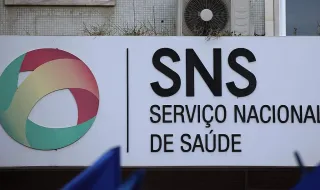
The National Health Service (SNS) of Portugal celebrates 47 years since its creation in 1979, when clinical records were mostly on paper and computing had a very limited presence in hospitals. The article describes the profound digital transformation that the SNS has undergone over nearly five decades, highlighting how technology revolutionized the provision of public healthcare in Portugal.

SAPO15/09/26, 19:30